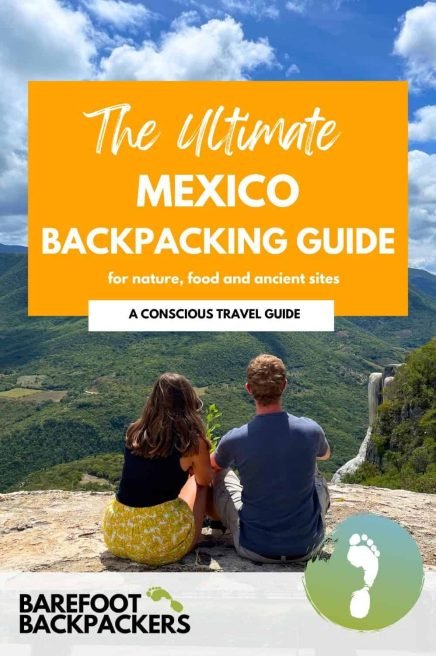


If you’re looking for the ultimate backpacking route and Mexico travel guide, then you have come to the right place. It’s one of our favorite places where ancient ruins meet rugged and beautiful beaches, and tacos are being cooked on every corner. Traveling here isn’t just about the sightseeing. It’s about getting in touch with stunning nature, learning traditional and ancient practices, and the vibrancy of the language and culture.
At Barefoot Backpackers, we have spent a lot of time in Mexico. Ellen has visited Mexico twice, the first time for four weeks exploring the Yucatán and Mexico City area, and another time for seven weeks, traveling from Mexico City through Oaxaca State to the Yucatán coast. Writer Gregory Kinsey, has also spent four months living in Oaxaca City and San Cristóbal de las Casas, which gave him time to settle in and get to know local life. Over time, Mexico has become one of our favorite countries for food, culture, nature, and the people.
What we love most about Mexico is how it blends tradition and modern life. You can eat food that’s been made the same way for generations, visit colorful markets filled with local crafts, and then find modern cafés or art galleries just around the corner. The connection to culture, land, and community runs deep, and you can feel it everywhere you go. From big cities and mountain towns to coastal villages and jungle ruins, Mexico has a bit of everything. It’s diverse, affordable, and welcoming, making it perfect for backpackers and long-term travelers.
This blog is supported by the community. If you choose to purchase through our links, we may earn a small commission, which allows us to keep creating content. As an Amazon Associate, we earn from qualifying purchases. Learn more.
Backpacking Route Through Mexico 2026
If you want to connect the dots and see Mexico in one longer trip, here’s a suggested route:
- Start in Mexico City and the area: explore the historic center, Roma, and Teotihuacán.
- Head to Oaxaca — spend time in Oaxaca City, then go south to San José del Pacífico, Mazunte, and Puerto Escondido, or the other way around.
- Travel to Chiapas — visit San Cristóbal de las Casas, a colorful highland town, and continue to Palenque to see jungle-covered Mayan ruins.
- Fly or bus to Mérida — use it as a base for cenotes and culture.
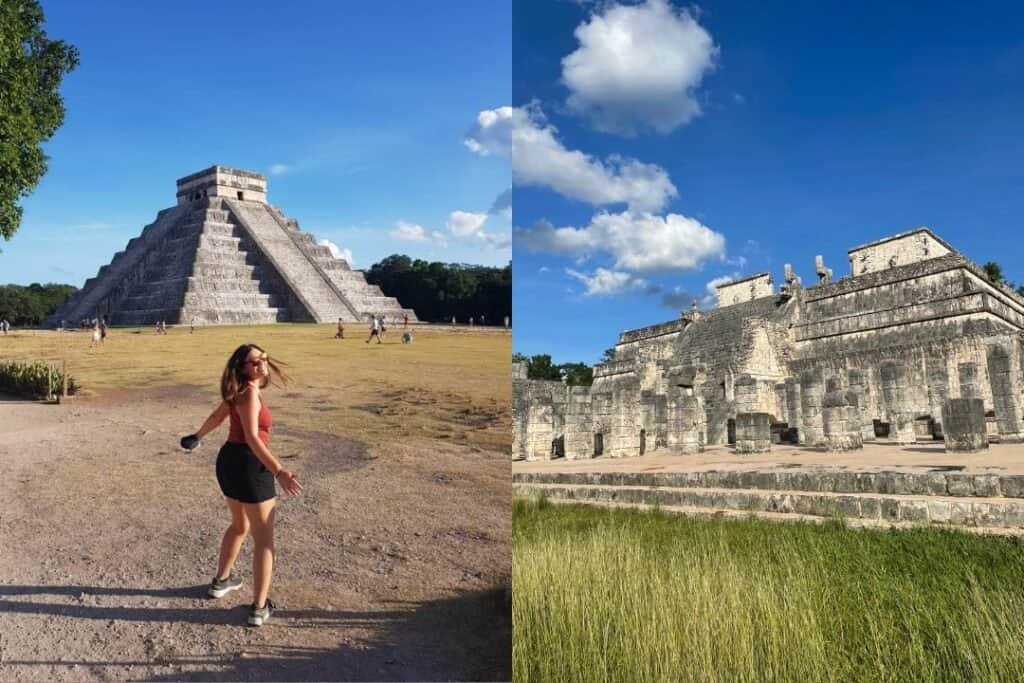
- Stay in Valladolid — overnight here to see Chichén Itzá early, before the crowds.
- Holbox — sandy streets, backpacker hostels, and public beaches make it the perfect island escape. Swim with whale sharks in season.
- Move on to Playa del Carmen — base yourself if you’re diving in Cozumel, or move quickly through.
- Spend time in Tulum — cenotes, Mayan ruins, and cafés on the main strip.
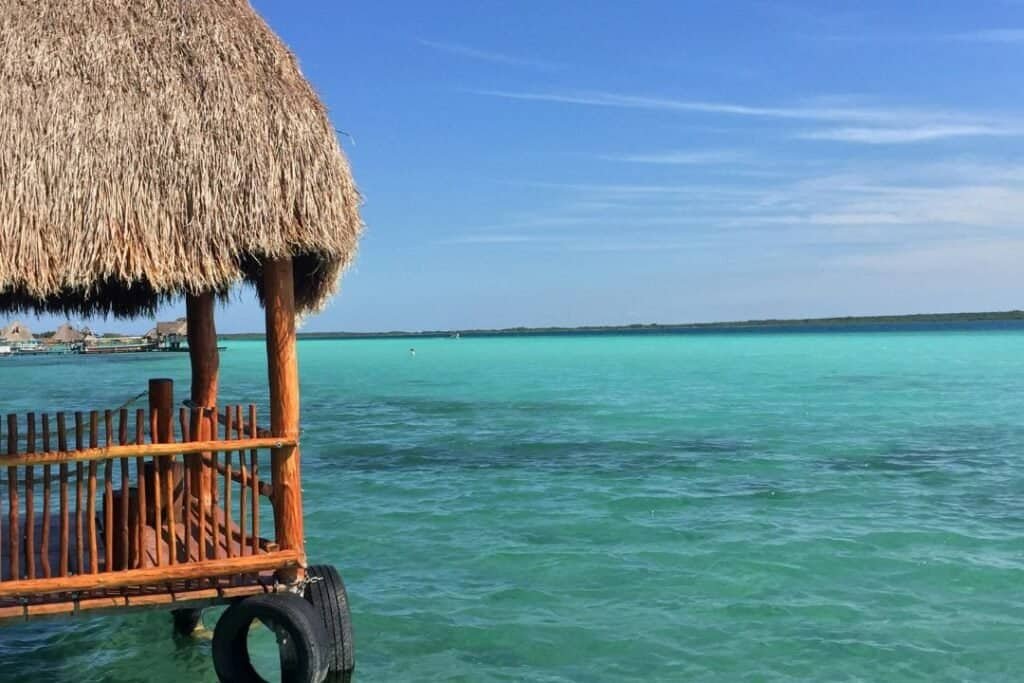
- Head to Bacalar (the “Blue Lagoon”) — float in the stunning freshwater lagoon with seven shades of turquoise.
- Finish in Cancún — most travelers fly out from here, or continue south into Central America. Belize is the easiest next step.
Mexico Backpacking Route Google Maps
Where to Stay
- Apapacho (Historic Center, Mexico City)
- Hostal Roma Condesa (Roma, Mexico City) – Best Value Private Rooms
- Rhodas Hostel (Puebla)
- Lool Beh Hostel (San Miguel de Allende)
- Hostal Casa de Dante (Guanajuato)
- Ticuchi Hostal Oaxaca (Oaxaca City)
- Casa Angel Hostel (Oaxaca City)
- Cabañas La Cumbre (San José del Pacífico, Oaxaca) – Book Directly
- Bonita Escondida (Puerto Escondido, Oaxaca)
- Hostal Alma Turquesa (Mazunte)
- Kin Balam Cabañas (Palenque)
- Puerta Vieja Hostel (San Cristóbal de las Casas)
- Casa Lool Beh (Merida)
- CHE Valladolid Hostel (Valladolid)
- Tribu Hostel (Holbox)
- SUUT Hostal Boutique (Playa del Carmen)
- Freelance Hostel (Tulum)
- The Yak Lake House (Bacalar)
Cool Places to Visit in Mexico
We will be covering every destination in depth from our recommended route. From budgets, transport, attractions, must-see spots, and the places that best align with the barefoot backpacker lifestyle.
Mexico City & Surrounding Area
Mexico City is a place that really captures all of your senses. It’s huge, loud, and has unlimited activities — one of the great cultural capitals of the world. To skip it would be to miss out on the true heart of modern Mexico. It’s layered with history from the Aztecs to Frida Kahlo, and feels incredibly alive and creative.
The historic center (Centro Histórico) is where it all begins — a blend of crumbling colonial architecture, grand cathedrals, street performers, and markets selling everything from churros to milagro charms. Here you’ll find the Zócalo, one of the largest public squares in the world, bordered by the Metropolitan Cathedral and the Templo Mayor, the excavated ruins of the Aztec capital Tenochtitlán. It’s a place where ancient and modern Mexico visibly meet.
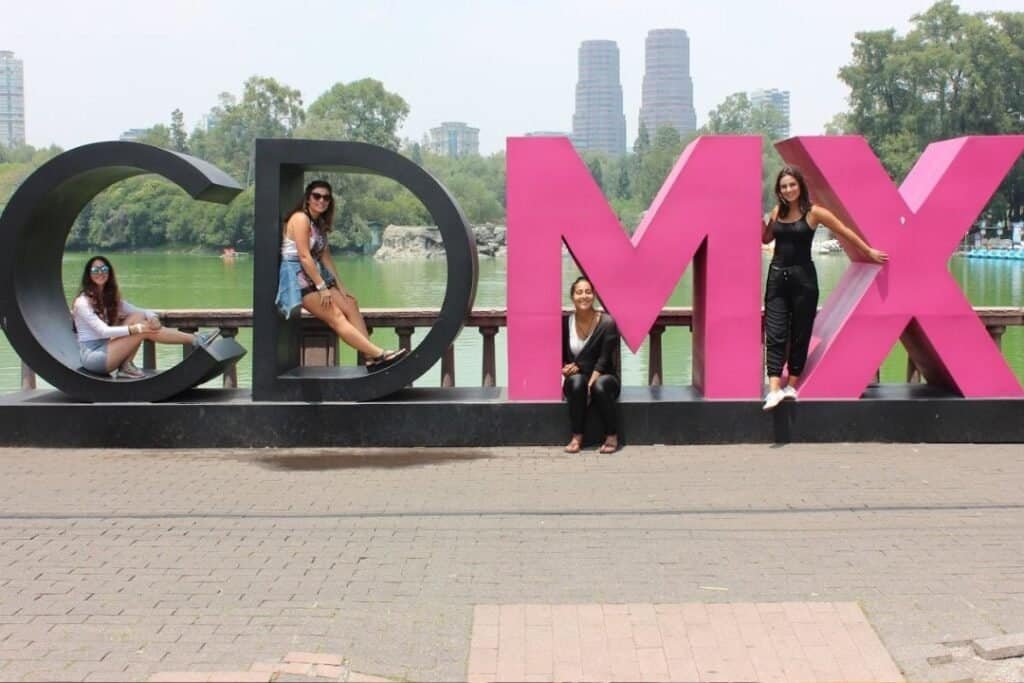
For a completely different side of the city, spend time in Roma and Condesa, the bohemian neighborhoods made famous by cafés, leafy boulevards, and art deco architecture. These areas are loved by both digital nomads and creative travelers — safe, walkable, and filled with boutique hostels, vegan eateries, and late-night mezcalerías. Meanwhile, Coyoacán, in the south of the city, is known for its cobblestone streets, Frida Kahlo’s “Blue House” (Casa Azul), and a slower, more residential feel.
Mexico City’s museums are world-class, and you could easily spend a week exploring them. The Museo Nacional de Antropología is one of the most important in Latin America, showcasing artifacts from the country’s pre-Hispanic civilizations. The Palacio de Bellas Artes hosts rotating art exhibitions and performances, while the Soumaya Museum and Museo Jumex are must-visit for contemporary art lovers. Don’t miss the Lucha Libre wrestling nights at Arena México — they’re loud, theatrical, and great fun.
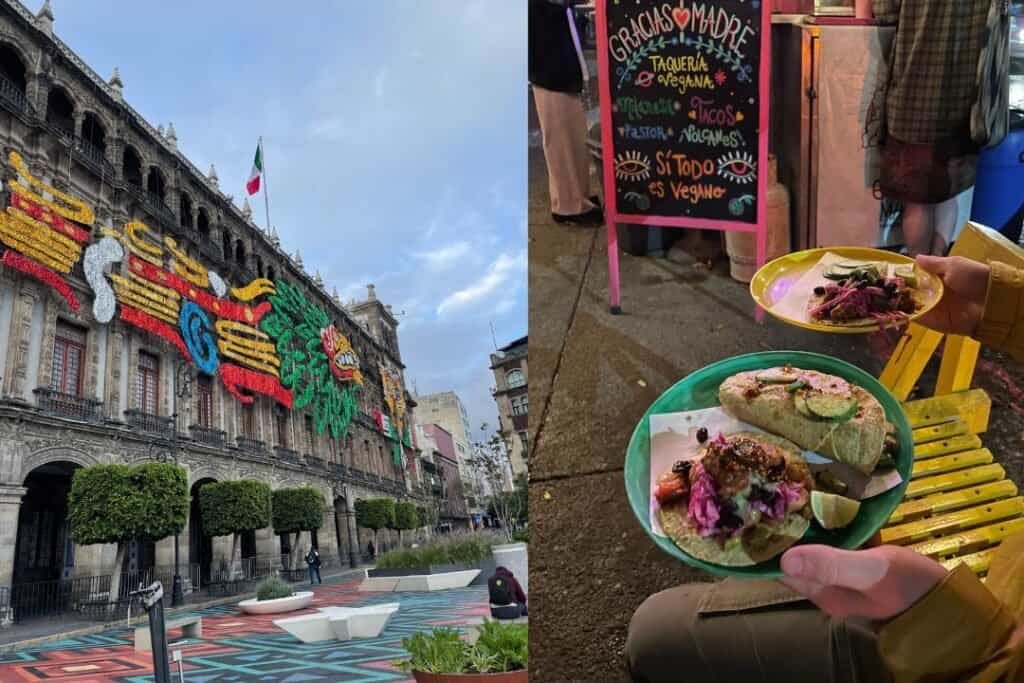
Main Attractions in Mexico City
- Zócalo (Main Square) and Metropolitan Cathedral
- Templo Mayor Archaeological Site
- Palacio de Bellas Artes and Alameda Central Park
- Museo Nacional de Antropología
- Chapultepec Castle and Chapultepec Park
- Frida Kahlo Museum (Casa Azul, Coyoacán)
- Lucha Libre at Arena México
- Roma and Condesa neighborhoods (cafés, vintage shops, nightlife)
- Mercado de la Merced and Mercado de Coyoacán (local food and crafts)
- Torre Latinoamericana (for sunset views over the city)
Where to Stay
- Apapacho (Historic Center, Mexico City)
- Hostal Roma Condesa (Roma, Mexico City) – Best Value Private Rooms
Getting around Mexico City is straightforward; the metro is one of the cheapest in the world, costing less than $0.50 per ride, while Ubers and taxis are affordable for longer distances. Women travelers can use the women-only metro cars, which feel safe even at busy times. Most museums charge between $3–10 for entry, while a plate of tacos or tamales from a street stall costs about $1–2. Evenings are perfect for sipping mezcal or trying pulque, a fermented agave drink that locals have enjoyed since pre-Hispanic times.
Day Trips from Mexico City
Teotihuacán Pyramids
A visit to the pyramids of Teotihuacán is one of the most unforgettable experiences in Mexico. Located about an hour northeast of the city, this vast archaeological site was once home to over 100,000 people and served as one of the largest cities in the ancient world. Climb the Pyramid of the Sun and Pyramid of the Moon for sweeping views over the Avenue of the Dead, or take a guided tour to learn about its mysterious origins. Many travelers also book sunrise hot-air balloon rides over the site.
Xochimilco Canals
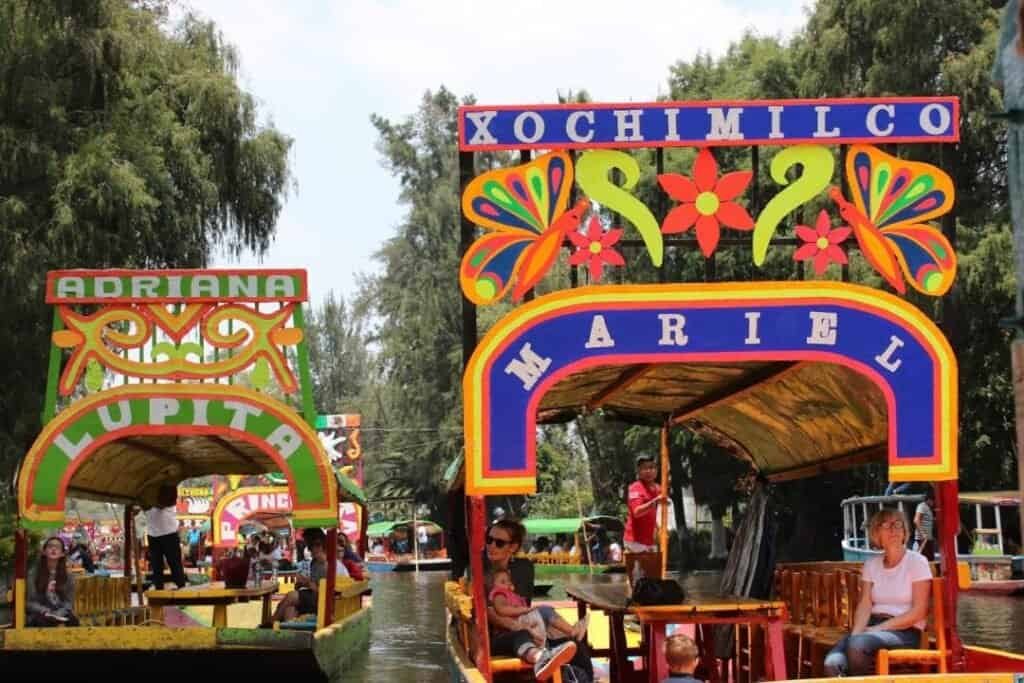
For something colorful and playful, visit the Xochimilco Canals in southern Mexico City. These waterways date back to the Aztecs, who built an elaborate system of floating gardens (chinampas) to grow crops. Today, the canals are lined with vibrant boats called trajineras, often filled with families, musicians, and travelers. You can rent a boat for a few hours, bring snacks, and float past mariachi bands and flower vendors. It’s touristy, yes, but also a great cultural experience. There are locals celebrating milestones, tourists, and couples on dates. The Xochilmilco is a living link to Mexico’s pre-Hispanic heritage and a great social experience. This was the absolute highlight of our time in Mexico City.
Puebla
Just two hours from Mexico City, Puebla is a colonial gem with colorful tiled buildings, church domes, and cobbled streets. The city is famous for its cuisine; this is the birthplace of mole poblano, Mexico’s most iconic sauce made from chilies and chocolate. Foodies should head to the local markets to try cemitas (a type of sandwich) or chiles en nogada (stuffed peppers with walnut sauce and pomegranate seeds).
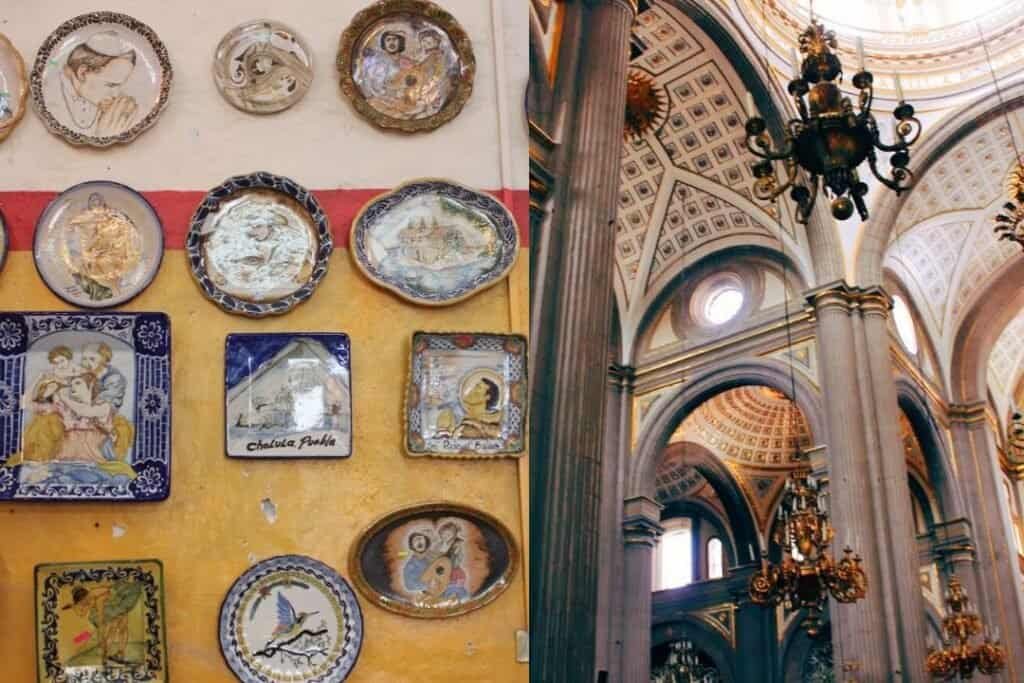
Beyond food, Puebla has a relaxed but elegant charm. Visit the Catedral de Puebla, wander the artisan streets of Calle de los Dulces and Barrio del Artista, and take in views of the nearby Popocatépetl volcano on a clear day. Accommodation and dining are cheaper than in the capital, and you can easily visit as a day trip or stay overnight for a slower pace.
Where to Stay:
- Rhodas Hostel (Puebla)
San Miguel de Allende
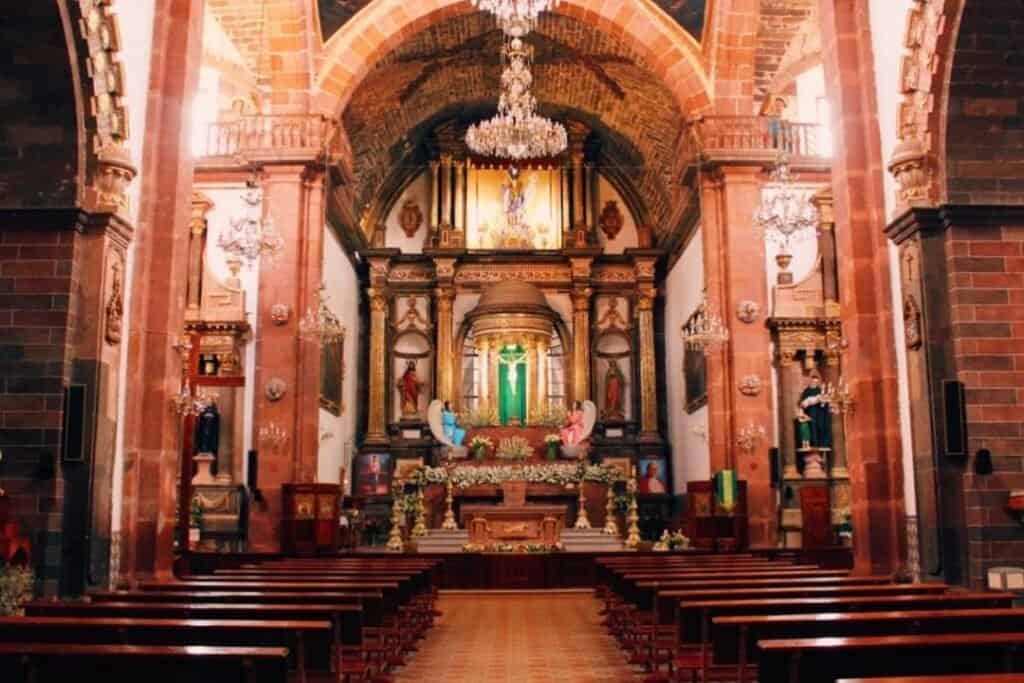
San Miguel de Allende feels like stepping into a painting. Its terracotta rooftops, cobblestone streets, and the pink spires of Parroquia de San Miguel Arcángel make it one of Mexico’s most photogenic towns. Once a sleepy colonial settlement, it’s now a haven for artists, writers, and spiritual seekers from all over the world. The town’s creative energy is palpable, with galleries, workshops, and music spilling from open windows.
You can spend your days wandering through artisan markets, taking cooking classes, or visiting nearby hot springs like La Gruta. San Miguel has a slightly upscale feel, boutique hotels, wellness retreats, and yoga studios abound, but it’s still accessible to backpackers, especially if you stay in local guesthouses. The sunsets from El Mirador are breathtaking, casting the whole town in golden light.
Where to Stay
- Lool Beh Hostel (San Miguel de Allende)
Guanajuato
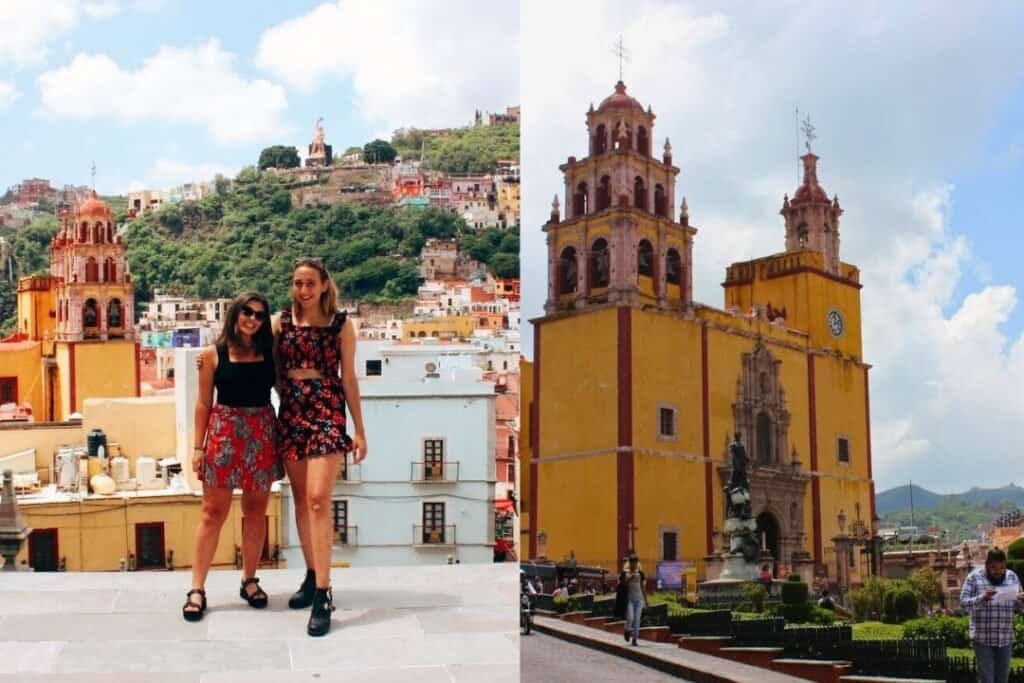
Guanajuato is one of Mexico’s most visually stunning cities. Built in a narrow valley, its houses are painted every color imaginable, stacked along winding alleys that twist through the hills. There are no main avenues here; instead, tunnels and underground roads connect neighborhoods, giving the city a maze-like, almost fairytale feel.
Guanajuato is a university town, so it’s youthful and full of energy. You’ll find music on every corner, students gathering in plazas, and street performers leading callejoneadas — evening musical parades through the alleyways. The Museo de las Momias (Mummy Museum) is a famous, if eerie, stop, while the Teatro Juárez and Alhóndiga de Granaditas tell stories of Mexico’s independence and cultural legacy. It’s also a great base for affordable Spanish lessons or volunteering opportunities if you’re traveling long-term.
Practical Costs & Travel Tips
Mexico City and its surrounding towns are some of the best-value destinations for cultural travelers. The metro costs around $0.30–0.50 per ride, while intercity buses to Puebla, San Miguel, or Guanajuato range between $10–25, depending on the route and class. Street food is cheap, healthy café meals in Roma or Condesa cost around $6–10, and entry fees to museums and archaeological sites average $5–10.
Overall, you can enjoy Mexico City comfortably on $40–60 per day, including accommodation, food, and transportation — though the city easily rewards travelers who stay longer and dig deeper.
Where to Stay
- Hostal Casa de Dante (Guanajuato)
Oaxaca
Read: Oaxaca Travel Guide: Backpacking Mexico
Oaxaca, between the beaches, mountains, and food, feels like several countries in one. We recommend giving yourself at least ten days here.
One of Mexico’s richest cultural regions, home to indigenous crafts, mole sauces that taste of centuries, colonial architecture, and rituals that feel close to the land. Oaxaca City is a brilliant base for markets (don’t miss the food markets), mezcal tasting, and day trips to Monte Albán.
Transport & costs in Oaxaca region: Long-distance ADO buses and regional carriers are frequent; expect the Oaxaca City-to-coast trip to take several hours. Hostels in Oaxaca City often run $10–25 USD for dorm beds; private rooms from $35 USD upward. Food is very affordable, especially at local markets and street stands.
Puerto Escondido
Puerto Escondido is one of Mexico’s best-known surf towns. It has long stretches of beach, plenty of backpacker hostels, and a lively nightlife scene. Even if you don’t surf, it’s a fun place to spend a few days swimming, watching sunsets, and soaking in the coastal vibe.
It is a surf town with big waves for pros and calmer beaches for beginners — a great place to learn surfing or simply stretch out on golden sand. It’s friendlier and less boutique than Oaxaca City, with a strong beach culture and affordable food stalls. Travel between Oaxaca City and the coast is usually by bus (ADO runs longer routes) or domestic flight.
There are surf lessons available for both beginners and pros will be delighted by the swell here. Puerto Escondido also offers more than just the beach. There’s a bioluminescent lagoon that you can take a tour of at night, which was beautiful. There are also many nice restaurants, a beach bar, and good nightlife spots here.
Where to Stay
- Bonita Escondida (Puerto Escondido, Oaxaca)
Mazunte
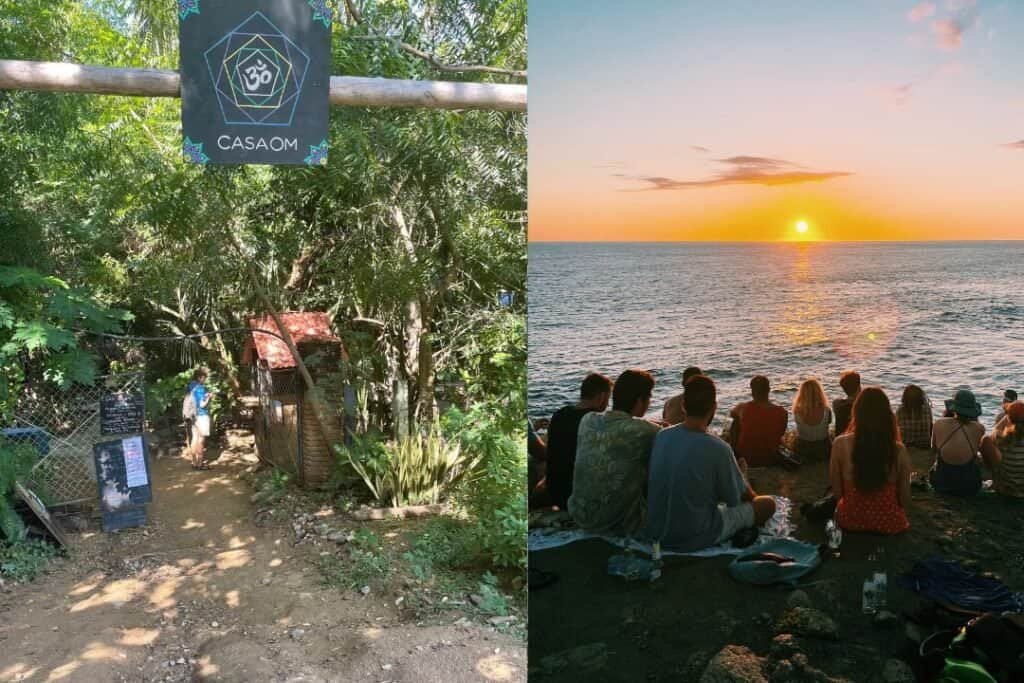
Mazunte is a smaller coastal town just a couple of hours from Puerto Escondido, and it has become a magnet for wellness travelers. The vibe is relaxed and spiritual — yoga studios, sound healing sessions, reiki, and meditation classes are everywhere. The cafés and restaurants lean toward healthy, vegetarian, and organic options, which makes it easy to live well here.
You can also go snorkeling off the coast, where dolphins, turtles, and even manta rays can be spotted. Mazunte has a slower pace than Puerto Escondido, and it’s easy to stay longer than planned once you fall into its rhythm.
The town has a relaxed surf/vibe and offers snorkeling options; the coastline invites low-key afternoons and restorative rest. There are eco-hostels and small retreats here geared to people who want to slow down and recharge.
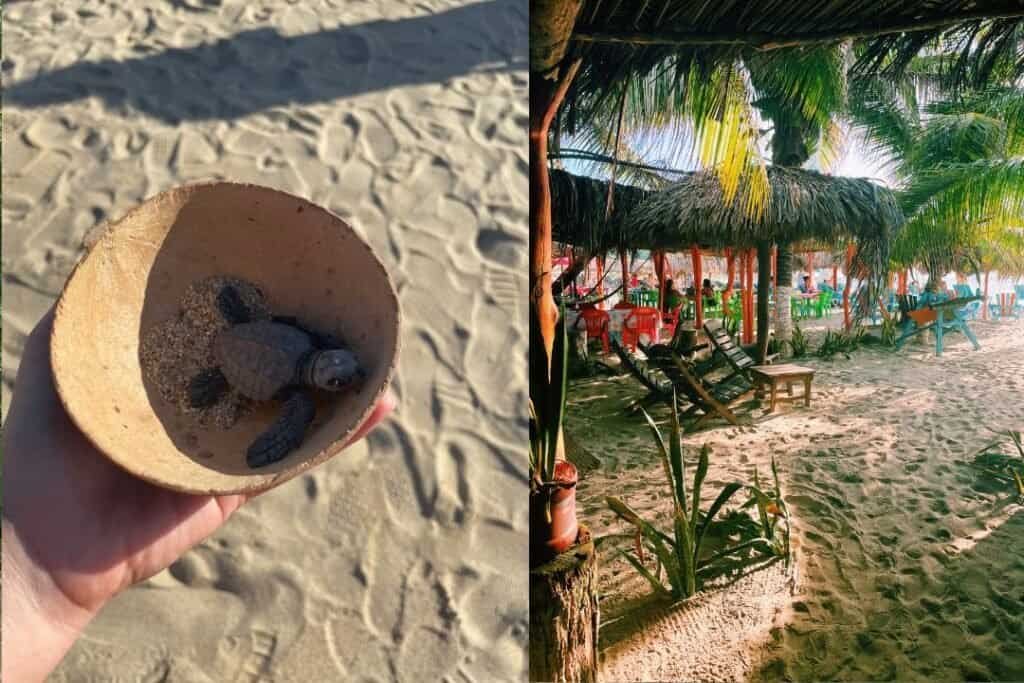
Mazunte is also known for its connection to nature. The Mexican Turtle Center here is dedicated to the conservation of sea turtles, and if you visit between July and December, you may witness hatchlings making their way to the ocean. Snorkeling and boat trips are popular too, especially for spotting dolphins or even whales further out at sea. As the sun sets, head up to Punta Cometa, a rocky viewpoint that’s one of the best places on the Oaxacan coast to watch the sky turn gold and pink.
Where to Stay
- Hostal Alma Turquesa (Mazunte)
San José del Pacífico
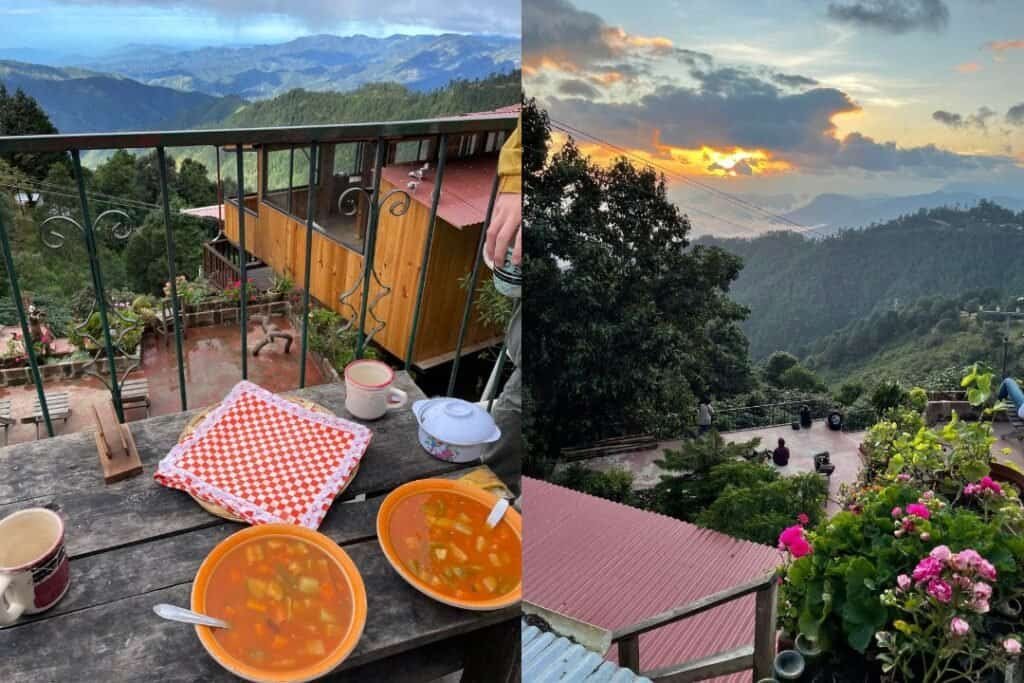
Perched high in the Sierra Madre mountains, San José del Pacífico is a different world from the beaches. Mist rolls over pine forests, sunsets stretch across valleys, and the air is crisp and clear. We stayed in rustic cabins at Cabañas la Cumbre, a perfect place to reset.
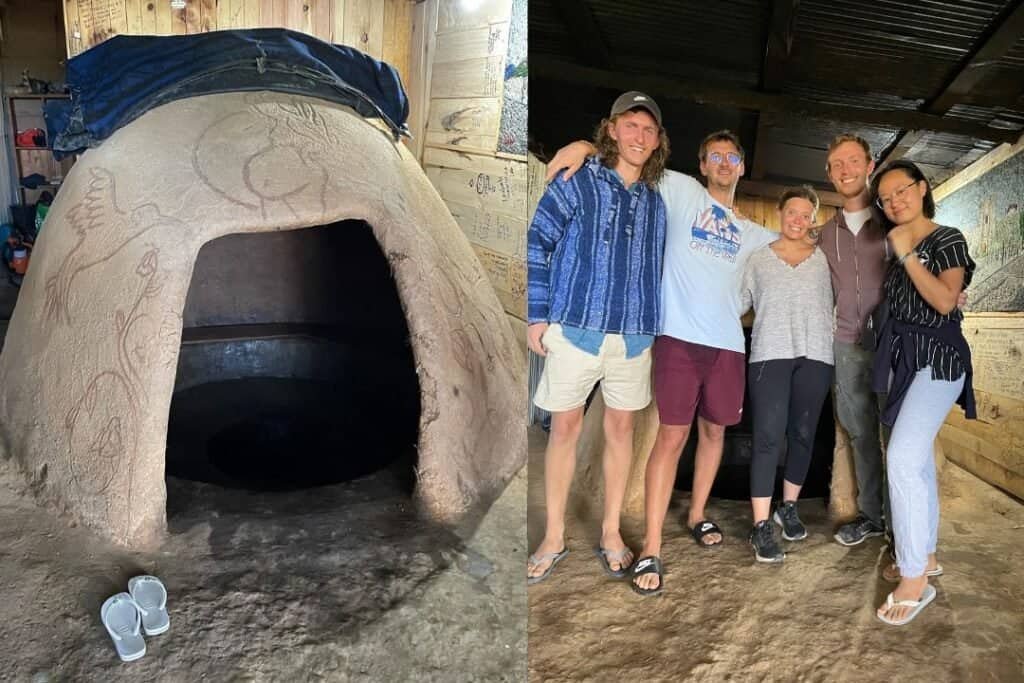
This town is known for two things: temazcal ceremonies and mushrooms. A temazcal is a traditional sweat lodge, a cleansing ritual that feels both physical and spiritual. Many backpackers also come here to explore the town’s reputation for magic mushrooms, which locals have used in spiritual contexts for centuries. Combined with the mountain setting, San José feels deeply otherworldly.
Oaxaca City
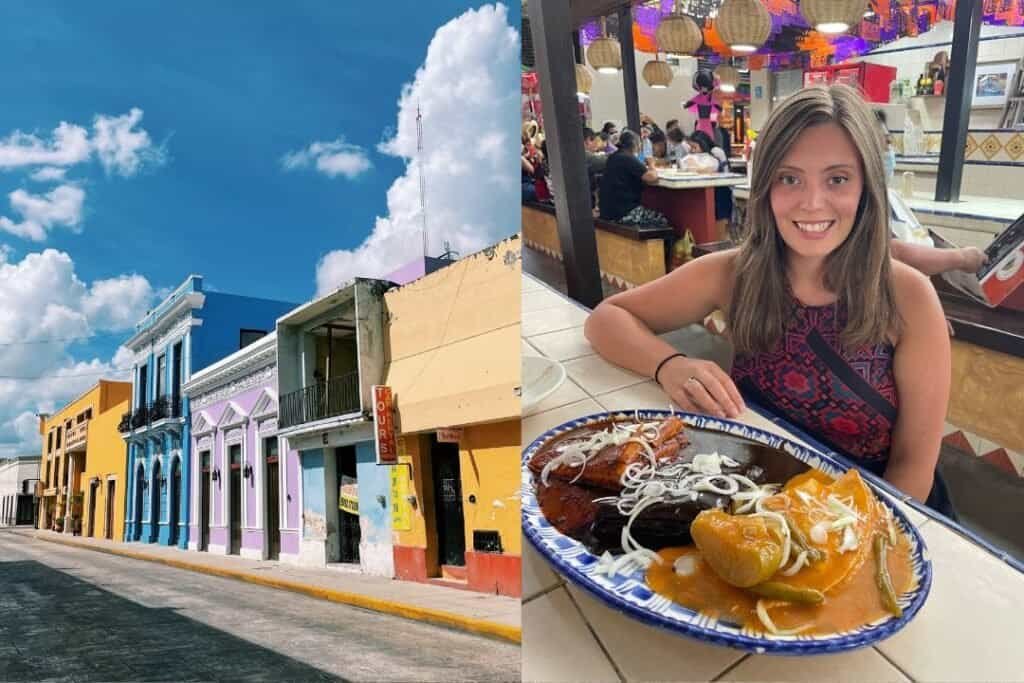
Oaxaca City is one of Mexico’s cultural capitals — vibrant, artistic, and full of life. It’s the kind of place that pulls you in with its colors, crafts, and irresistible smells of chocolate and roasted chilies. Every corner of the city feels like a celebration of tradition. The markets are a sensory experience, especially Mercado Benito Juárez and Mercado 20 de Noviembre, where you’ll find moles (complex sauces made from chilies, spices, and chocolate), freshly ground cacao, handwoven textiles, and local pottery. Food is central to Oaxacan identity; street vendors sell tlayudas (giant grilled tortillas loaded with beans, cheese, and meat), memelas, and tamales oaxaqueños wrapped in banana leaves.
At night, the city comes alive in a different way. Mezcal bars line the cobbled streets, offering tasting flights of smoky artisanal mezcal made from local agave varieties. Many are family-run distilleries or cooperatives that preserve the ancient production methods passed down through generations. Music fills the air, marimba, jazz, and traditional folk, and the plazas are perfect for slow evening strolls. Oaxaca also has a thriving art scene, with galleries, street murals, and cultural centers like Museo de las Culturas de Oaxaca showcasing the city’s creativity and deep Indigenous roots.
If you’re exploring the area, Monte Albán is an essential stop. This ancient Zapotec city, built atop a flattened mountaintop overlooking the Oaxaca Valley, was once one of the most powerful centers in Mesoamerica. Its vast plazas, pyramids, and observatories tell stories of astronomy, ritual, and empire. From the top, you can see the entire valley stretch out below, dotted with villages still making crafts using techniques that date back to Monte Albán’s time.
Where to Stay
- Ticuchi Hostal Oaxaca (Oaxaca City)
- Casa Angel Hostel (Oaxaca City)
Hierve el Agua
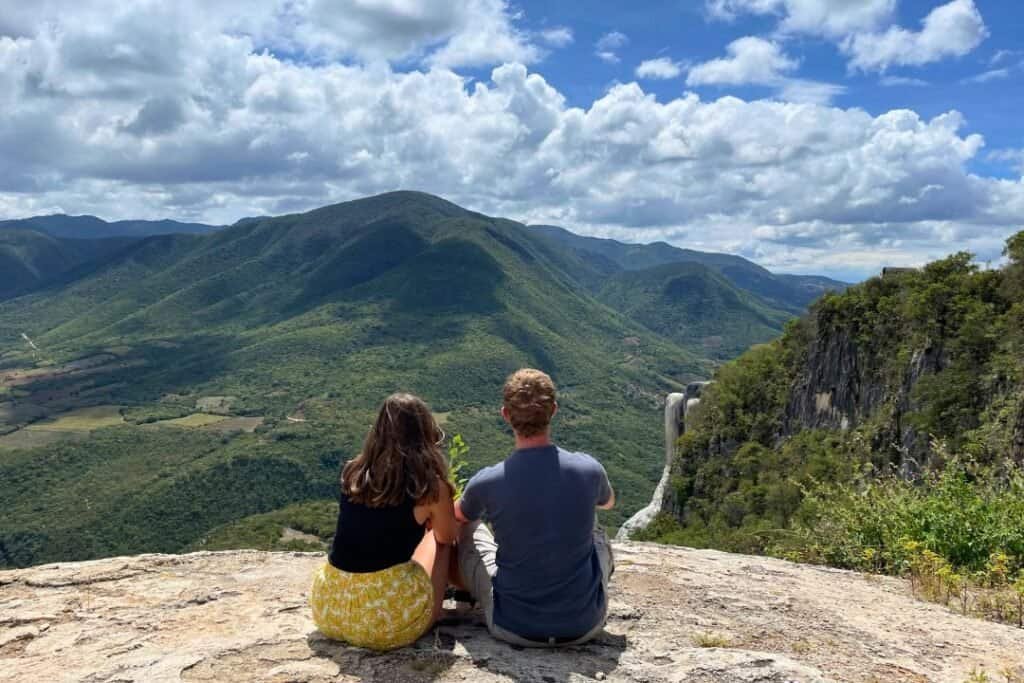
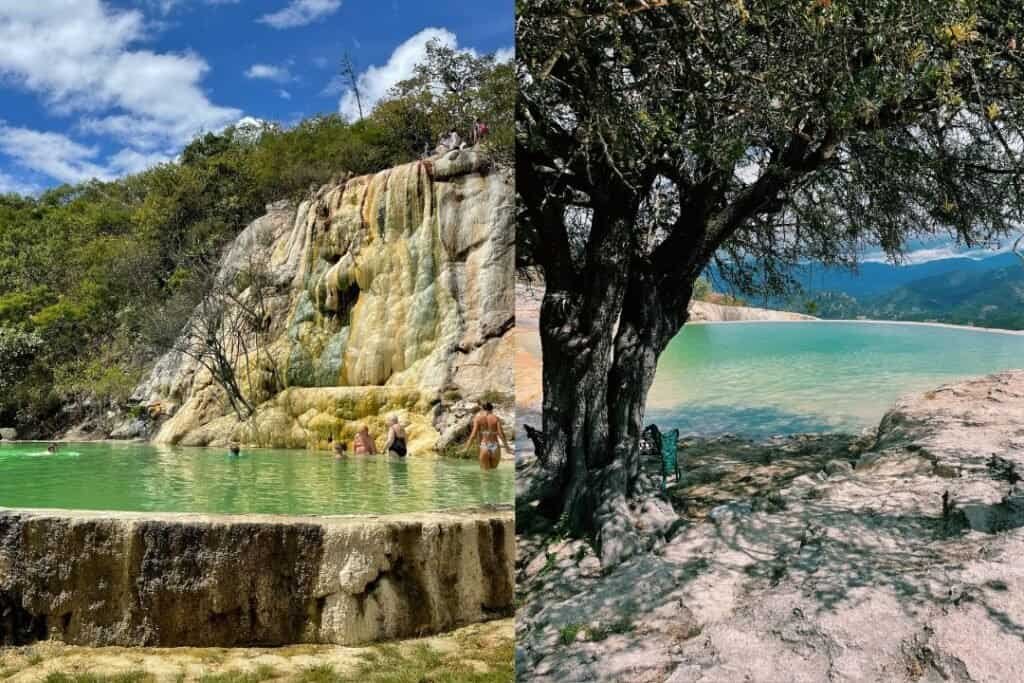
And then there’s Hierve el Agua, one of the most surreal natural wonders in Mexico. Getting there from Oaxaca City takes around two hours — you can rent a car, join a small group tour, or take a series of local buses and colectivos to the nearby town of Mitla, then hop in a shared truck up the winding mountain roads. The drive is an adventure in itself, passing through dusty villages and agave fields that seem to stretch forever. The road can be bumpy and steep in parts, so allow extra time and pack snacks, water, and sun protection.
When you arrive, Hierve el Agua is unlike anything else — two towering petrified waterfalls formed by mineral-rich springs cascading down the cliffs over thousands of years. At the top, turquoise pools overlook a dramatic valley, perfect for swimming or soaking while taking in the view. The minerals in the water give it an ethereal color, and at sunrise or sunset, the light turns everything golden. Despite its growing popularity, it still feels sacred — locals believe the waters hold healing properties. Spend a few hours here floating, hiking the short trails, and soaking up one of nature’s masterpieces before heading back down to Oaxaca City.
San Cristóbal de las Casas
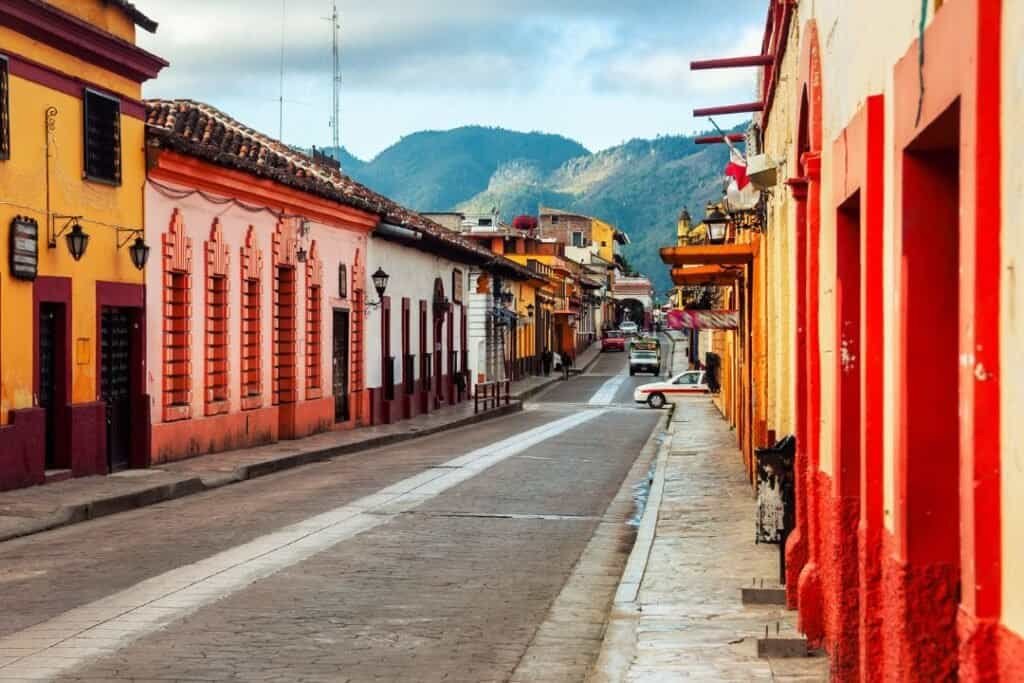
San Cristóbal de las Casas is one of Mexico’s most beloved backpacker towns. Set high in the Chiapas mountains, the air is crisp, the streets are lined with colorful colonial buildings, and the vibe is youthful and creative. The town is surrounded by Indigenous villages, and you’ll see traditional dress and vibrant textiles at the markets. Many travelers come here for the culture as much as the mountain scenery, and it’s an easy place to linger.
Cafés are everywhere, perfect if you’re working remotely or simply want to sip coffee in between exploring. There are also eco-hostels and wellness retreats offering yoga, meditation, and plant medicine experiences. Spend a day wandering the artisan markets, then hike in the surrounding hills or visit the Sumidero Canyon, a dramatic gorge with towering cliffs. San Cristóbal has that balance of liveliness and stillness that makes you want to stay longer than planned.
For transport, buses connect San Cristóbal to other Chiapas highlights. For day trips, people often visit the Sumidero Canyon (boat ride) or nearby traditional Tzotzil and Tzeltal villages. San Cristóbal is also a great place for longer stays if you want workshops: weaving, cooking, or Spanish classes are easy to find.
Budget-wise, San Cristóbal is very backpacker-friendly. Dorms are cheap, food is local and affordable, and many travelers combine nearby eco-activities with a slower pace that stretches your budget in a good, soulful way.
Where to Stay
- Puerta Vieja Hostel (San Cristóbal de las Casas)
Palenque
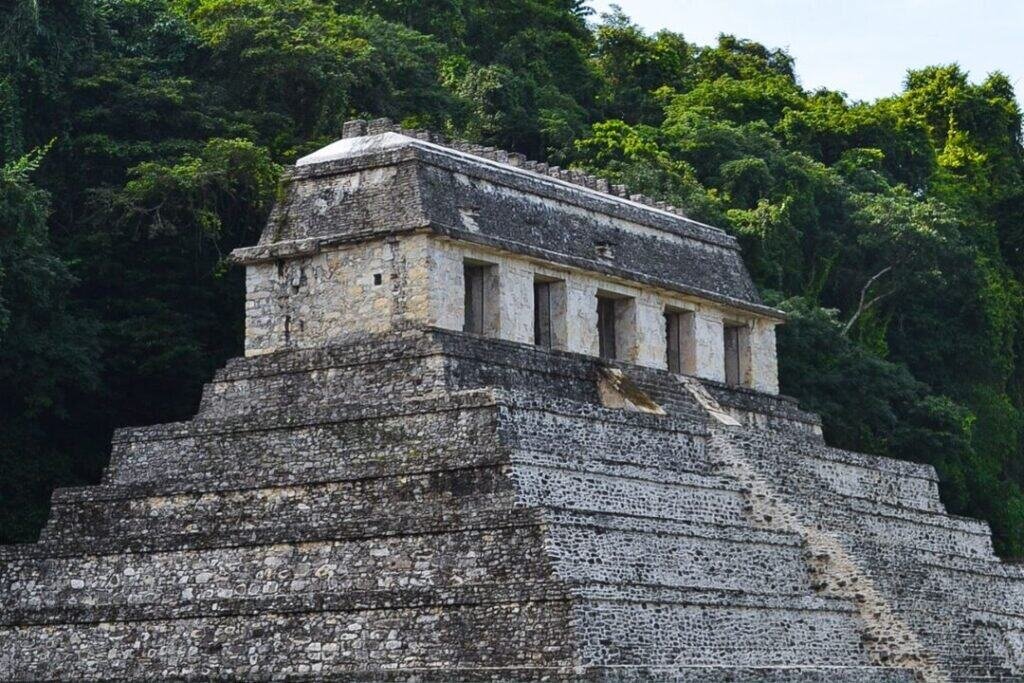
From San Cristóbal, many travelers continue to Palenque, a jungle-covered town famous for its Mayan ruins. The Palenque archaeological site is one of the most atmospheric in Mexico — temples rise out of thick rainforest, and howler monkeys echo through the trees as you climb ancient stone steps. It’s smaller than Chichén Itzá, but what makes Palenque special is its wild, overgrown setting that feels like stepping back in time.
Beyond the ruins, Palenque is surrounded by waterfalls and rivers. Misol-Ha and Agua Azul are two of the most popular day trips, with turquoise pools where you can swim. The town itself is fairly simple, but it has plenty of backpacker accommodations and local restaurants serving hearty Chiapas dishes. Palenque is a natural stopover between Chiapas and the Yucatán, and well worth a few days for history and jungle exploration.
Where to Stay
- Kin Balam Cabañas (Palenque)
Yucatán Peninsula
The Yucatán is often the first stop for travelers, and it’s easy to see why. Here you’ll find white-sand beaches, Mayan ruins, and that Caribbean turquoise you’ve seen in postcards. It’s more developed and touristy than other parts of Mexico, but with a little intention, you can find authentic, backpacker-friendly experiences.
Mérida
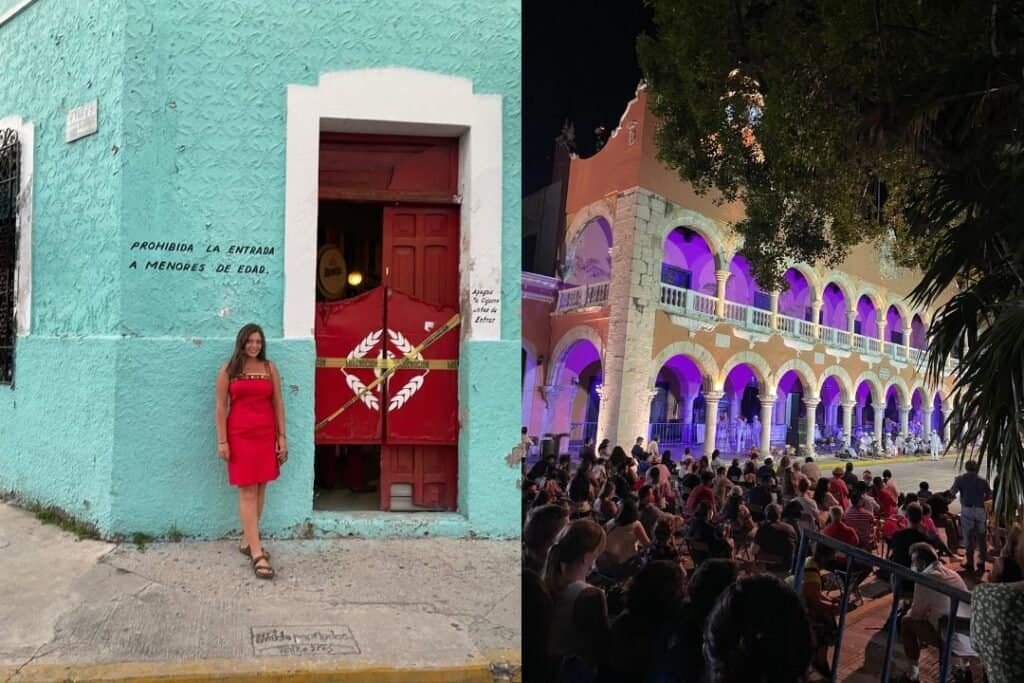
Mérida is a vibrant colonial city and a good place to get a feel for local life away from the beach crowds. Its plazas fill with music and dancing in the evenings, and the city makes a good base for exploring cenotes. One or two days here is usually enough unless you’re slow traveling.
It’s quieter than Playa or Tulum, but it has a local feel as well as a hub for expats. It is an ideal place for cenote tours, hacienda visits, and nearby Valladolid or Chichén Itzá. Mérida’s markets are excellent for food, and the city often feels like a calm, modern vibe.
Where to Stay
- Casa Lool Beh (Merida)
Valladolid
Valladolid, meanwhile, is the better backpacker hub if you want to visit Chichén Itzá. It’s closer to the ruins, cheaper, and has a laid-back vibe. Stay in a hostel near the main plaza and spend your evenings eating at market stalls before heading to the ruins in the morning.
It’s small, photogenic, and perfectly located for an early-morning visit to Chichén Itzá, seeing the site at first light is worth getting up for. Chichén Itzá does charge a combined federal/state fee for international visitors (expect around the mid-hundreds of pesos range); check official ticket pages before you go so you’re not surprised at the gate.
Where to Stay
- CHE Valladolid Hostel (Valladolid)
Holbox
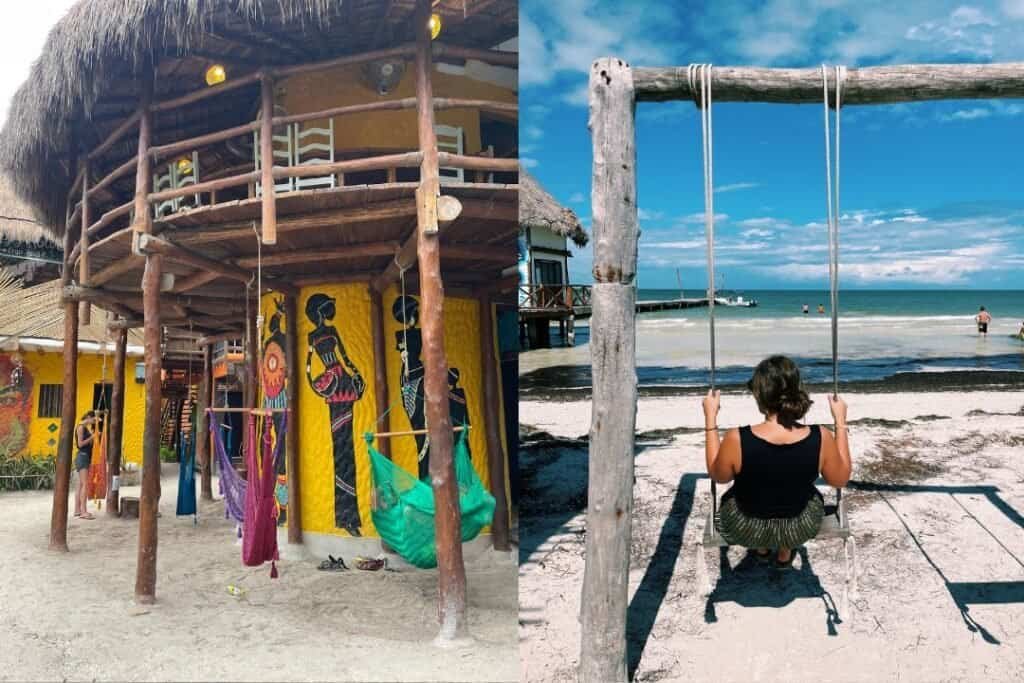
Holbox is an island at the tip of the Yucatán, and it’s become a favorite among backpackers. With sandy streets, hostels filled with hammocks, and wide public beaches, it feels more accessible and relaxed than Tulum.
When we visited, parts of the island were flooded, but that didn’t take away from its fun atmosphere. Holbox has a barefoot, slow-living vibe that makes it easy to lose track of days. It’s also one of the best places in Mexico to swim with whale sharks if you’re visiting between June and September.
Holbox is a soft-edged island with wooden streets, open skies, and a relaxed pace. The small ferries run regularly from Chiquilá (about a 20–30 minute crossing), so it’s easy to pop over for a few days of beach life and simple hostels — great if you want public beaches (unlike much of the Tulum coastline). Holbox is backpacker-friendly, and late-summer/winter whale shark season draws divers and nature-lovers. Note the ferry schedules and times; boats often run hourly, and operators post timetables online. (Holbox Express Ferry)
Where to Stay
- Tribu Hostel (Holbox)
Playa del Carmen
We spent a week in Playa del Carmen, mostly because it’s one of the best bases for scuba diving. The reefs around Cozumel are world-famous, and cenote diving here is like nowhere else on earth. If you’re into diving, it’s worth stopping here.
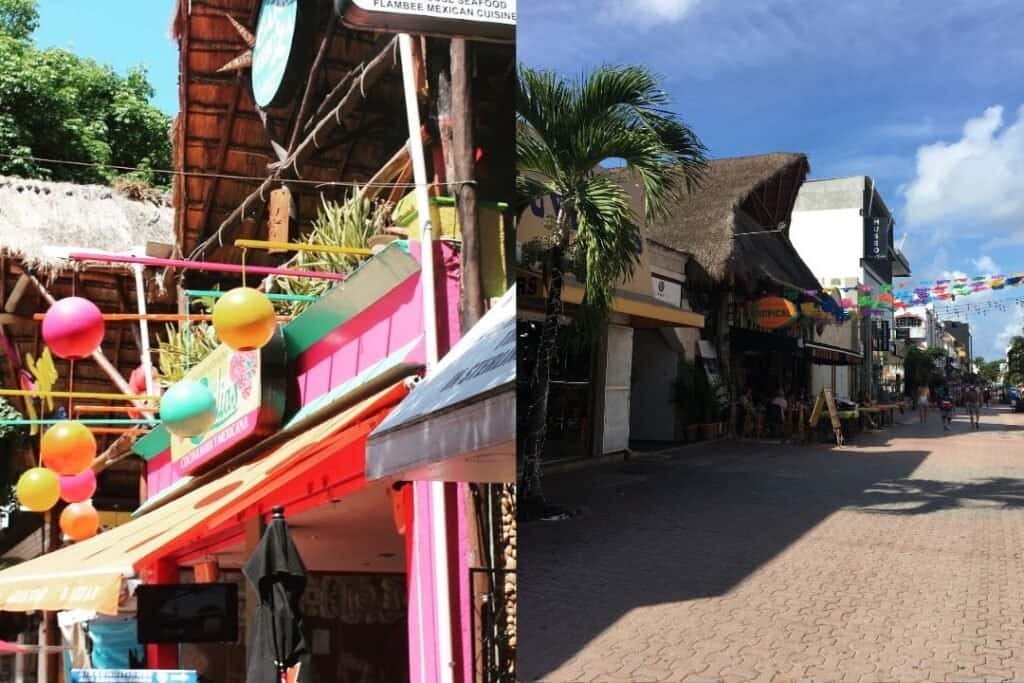
That said, Playa del Carmen itself didn’t really do it for us. It was very Americanized and commercial. The main strip is lined with big clubs, resorts, and chain restaurants, and the atmosphere felt a little too polished compared to other Mexican towns. If you’re not diving, we wouldn’t suggest more than a night or two here before moving on.
It’s a practical base, especially if you’re diving or want island connections (Cozumel) and frequent transport links. The main strip is busy, full of shops and tourist services, but a short walk away, you can find quiet streets with good cafés and local bakeries. For budget travelers, hostels are common, and ferry or bus connections to nearby towns are frequent.
If you want a more low-key island vibe, Paraiso spots like Holbox are better. Costs in Playa are modest by Western standards: dorm beds and cheap eats are easy to find, though beach-front restaurants charge a premium.
Where to Stay
- SUUT Hostal Boutique (Playa del Carmen)
Tulum
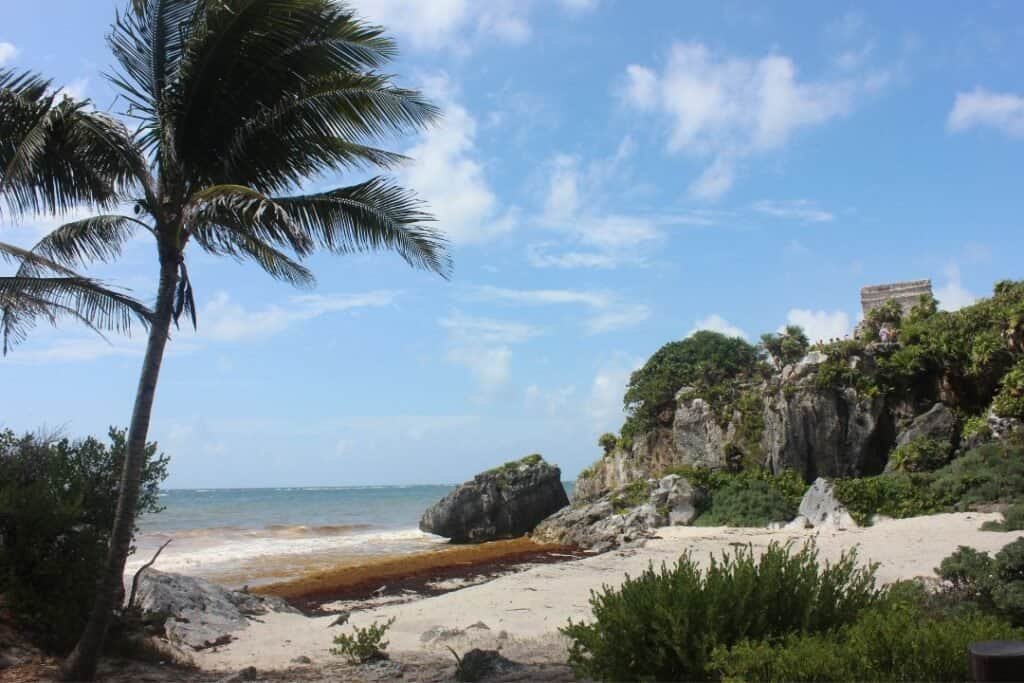
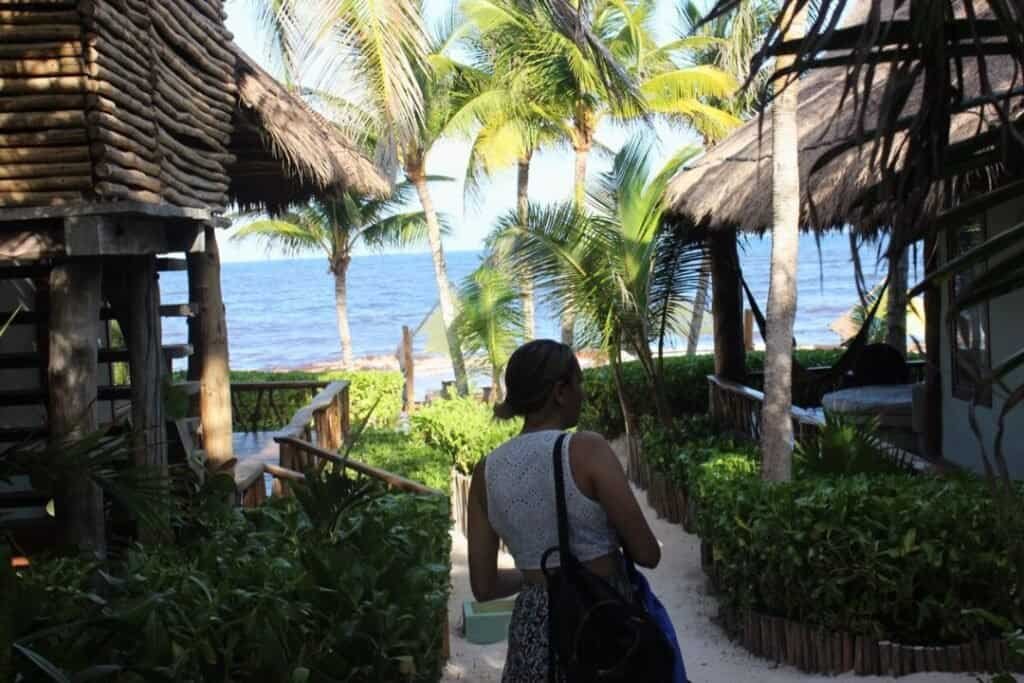
Tulum has a global reputation — some of it deserved, some of it hype. The beaches are beautiful, but most are blocked off by private resorts and beach clubs, so free public access is rare. Staying in hostels on the main street is a better option than splurging on beachfront hotels.
That said, Tulum has plenty to offer if you know where to look. The cenotes are a must, and one of the best ways to see them is by hiring a tuk-tuk driver to take you on a day tour or visiting the local ones by bicycle. Akumal, a short trip away, is incredible for swimming with turtles. For history, visit the Tulum ruins overlooking the ocean and the nearby Coba ruins tucked into the jungle. The café culture is also lively, with boutique spots offering smoothies, coffee, and healthy food.
Tulum has evolved from a chilled backpacker haven to a mix of boutique hotels, wellness culture, and higher-priced beachfront spots. The nearby cenotes are the highlight of traveling in the Yucatán area and connect you to ancient Mayan cosmology and water rites. (Cenote entrances vary by site and can be $200–500 MXN; larger, popular cenotes like Gran Cenote or Dos Ojos can be pricier.)
Where to Stay
- Freelance Hostel (Tulum)
Bacalar
The “Blue Lagoon” is a softer, slower end-note: freshwater lagoons with seven turquoise shades, quiet towns, and hammock-perfect sunsets. It’s a perfect place to close a Yucatán loop, especially if you want calm water, inexpensive stays, and lots of relaxation. If you are continuing your travels, you can head into Central America via Belize.
Where to Stay
- The Yak Lake House (Bacalar)
Backpacking Mexico Travel Guide Tips
- Best time to visit: December to April is the dry season and the most popular. May to October is wetter and hotter, but quieter.
- Transport: ADO buses are reliable for long trips. In cities, use Uber where available.
- Budget: Mexico is affordable, especially if you eat at local markets. Hostels range from $10–20 per night.
- Food: Try street tacos everywhere, sample mole in Oaxaca, and sip mezcal instead of tequila.
- Safety: Stick to well-trodden backpacker routes, avoid flashing valuables, and always ask locals about safe areas.
How to Get Around Mexico (Practical Transport Notes)
Mexico has a very useful transport network for backpackers: intercity buses, regional flights, ferries to islands, and local colectivos. ADO is the major reliable bus company for many southern and coastal routes — for example, certain popular routes (Mexico City ↔ Oaxaca) are priced in the range of about $60 USD depending on class and time; booking online or at the station is straightforward. (Busbud)
Buses: Comfortable overnight buses can be your best friend for long legs (save a night’s accommodation and wake up in a new town). Book in advance for holiday periods. Regional buses and colectivos are cheap and flexible for short hops.
Flights: Domestic carriers like VivaAerobus, Volaris, and Aeroméxico serve many routes. Flights can be cheap if booked early — useful for long coastal jumps (Oaxaca ↔ Cancún, for example).
Ferries: For islands like Holbox, ferries run regularly from Chiquilá, and schedules are posted by operators (Holbox Express is one of the providers — ferries run hourly). Check departure points and buy return tickets when the islands are busy. (Holbox Express Ferry)
Local travel tips: Keep small change for colectivos and markets, and download maps for offline navigation. Night buses are common — pack earplugs and a light scarf for comfort.
Budgeting Mexico: How Much to Expect
Mexico is very affordable compared to Western Europe or North America, but it’s flexible — you can spend very little or live in boutique comfort depending on taste. In this backpacking Mexico travel guide, we know more about budget and mid-range traveling.
- Average budget traveler daily: many sources put budget travelers around $40–60 USD per day (dorm beds, local food, occasional tours). Mid-range travelers commonly land higher. Use local markets and street food for huge savings.
- Hostels: Dorm beds often $10–25 USD; private rooms $30–70+, depending on location and season.
- Site fees: Major archaeological parks and cenotes have entrance fees (Chichén Itzá’s combined federal/state fee is in the several-hundreds-of-pesos range for international visitors — check the official ticket pages for exact, current rates).
A sample daily backpacker split: dorm bed $12, meals $15, local transport $5, activities $10–20 = roughly $42/day — adjust up if you do diving, day tours, or internal flights.
Backpacking Mexico Travel Guide Tips for Women
- Dress respectfully where required (temples, rural villages). A scarf or long skirt is handy.
- Use official taxis, ride-hailing apps, or pre-booked transfers at night. Take registered taxis from stands or apps like Uber in cities where available.
- Keep copies of identification, be alert in crowded markets, and trust local online groups for women travelers — they often share safe hostels and suggested neighborhoods.
- For solo women, larger towns with a backpacker presence (San Cristóbal, Oaxaca City, Playa, Tulum) feel easier to navigate and have supportive communities.
FAQ: Backpacking Mexico Travel Guide
How many days do you need for Mexico?
Two to three weeks gives you enough time to see a region (like Yucatán or Oaxaca) plus Mexico City. For a full loop, give yourself at least a month.
Is Mexico safe for solo female travelers?
Yes, if you take normal precautions. Stick to popular backpacker towns, use registered taxis or Uber, and avoid walking alone late at night. Hostels are great for meeting other travelers.
What’s the best way to get around Mexico?
Long distances are best covered by ADO buses or flights. Within cities, walk, use rideshares, or local buses.
What is Mexico famous for?
Mayan ruins, colonial cities, cenotes, beaches, tacos, mezcal, and one of the most diverse food cultures in the world. Our backpacking Mexico travel guide recommends the famous spots, but also places and activities that we really love that are centered around nature, wellbeing, and ancient practices.