

Runners’ backpack options now sit across a wide spectrum, ranging from lightweight running vests to higher-capacity fastpacking packs built for long days and overnight travel. This guide will take a look at running backpacks that are great for fastpacking and commuting, as well as traditional running vests. A true running backpack or fastpack adds structured storage, higher volume, and better load control for runners covering long distances, mixed terrain, or multi-hour outings. If you spend time running on the trail, investing in the right gear for runners can really help you to stay present when out in nature
In this guide, we have selected high-capacity running vests of 6L to 18L and over that are designed for minimal carry and close-to-body stability, making them ideal for long runs on the trail, usually holding water, fuel, and a light layer. As well as fastpacking packs that blend running and lightweight backpacking, allowing you to cover more ground efficiently while carrying shelter, extra layers, and food.
The packs we have featured focus on practical volume and are breathable rather than racing-only, minimalistic packs. These models work for runners who want flexibility between trail running, mountain days, and light fastpacking without maintaining multiple packs.
Be sure to check out our guide to the best daypacks for hiking if you are looking for a pack that is more suited to hiking than fastpacking. We also have also explained the differences between running vests, running backpacks, fastbackpacks, and hiking daypacks in the conclusion of this article, so check that out if you need more information. With that in mind, let’s get into it.

This blog is supported by the community. We may earn a small commission if you purchase through our links. As an Amazon Associate, we earn from qualifying purchases. See our Privacy Policy
The Best Runners Backpack at a Glance
- Best Overall Fastpack: Ultimate Direction Unisex Fastpack 20
- Best High-Volume Vest Backpack: Black Diamond Distance 22
- Best Mid-Range Running Backpack: Mammut Aenergy 18
- Best Hot Weather Running: CamelBak Octane 10 70oz Hydration Pack
- Best 12L Storage Vest: Salomon Advance Skin 12
- Best 11L Storage Vest: CamelBak Apex Pro Run Endurance Vest
- Best 8L Storage Vest: Salomon Active Skin 8
- Best 7L Capacity Vest: Nathan TrailMix 7L Running Vest
- Best 6L Storage Running Vest (Men): Osprey Duro 6L Men’s Running Hydration Vest
- Best 6L Storage Running Vest (Women): Osprey Dyna 6L Women’s Running Hydration Vest
- Best Stability System: USWE Pace Running Vest Hydration Pack
Best Runners Backpacks

The Ultimate Direction Fastpack 20 blends a vest-style fit with true backpack capacity, making it ideal for long mountain days, fastpacking trips, and supported ultras. The rigid back panel stabilises heavier loads while the Infiknit harness and Fastflow ventilation keep airflow high and chafing low during extended efforts. Front strap pockets keep bottles, snacks, and navigation within easy reach.
At 23.4 litres, it comfortably carries layers, food, and safety gear, and can even handle minimalist overnight setups. The roll-top closure expands or compresses easily depending on load size. While the zippered shoulder pockets won’t fit larger smartphones, overall comfort and versatility remain excellent.
Key specs
23.4L capacity
Weight 1.3 lb / 0.59 kg
Hydration bladder compatible
100% polyester construction
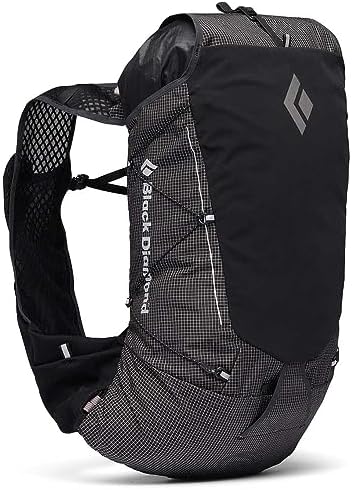
The Black Diamond Distance 22 is one of the highest-capacity true vest running backpacks available, designed for runners who want volume without moving to a traditional framed pack. The stitch-less edge taping harness contours closely to the torso for comfort and weight reduction while remaining highly breathable. Integrated pole storage allows fast deployment on technical terrain.
A rear external mesh compartment provides fast access to shells or gloves during weather changes, which sets this model apart from smaller versions. The pack performs best when moderately filled, as lighter loads can feel slightly loose. It suits long alpine objectives, fast hiking, and extended mountain days.
Key specs
22L capacity
Weight 14.5 oz
Ripstop nylon construction
Vest-style harness system
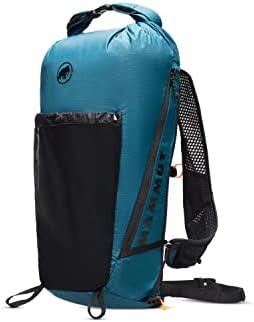
The Mammut Aenergy 18 delivers impressive performance at an accessible price point. Designed for fast mountain movement, it offers a secure fit with wide ergonomic shoulder straps and a lightweight frame that stays stable during scrambling, climbing, or steep trail running. Reflective details and an integrated emergency whistle improve safety in variable conditions.
While pocket layout is simple with fewer exterior compartments, the pack carries essentials efficiently and remains highly durable thanks to recycled ripstop materials. This makes it ideal for runners who regularly leave maintained trails and need a tough pack without paying premium pricing.
Key specs
18L capacity
Weight 13.4 oz
Polyamide fabric construction
Hydration sleeve compatible

The CamelBak Octane 10 is designed for runners who prioritise fast hydration and airflow during warm-weather training and long road or light trail efforts. The included 2-litre Crux reservoir delivers a higher flow rate, making it easy to stay hydrated when temperatures rise. The 3D Vent Mesh harness improves airflow and cushioning, helping reduce heat buildup and pressure points during longer sessions.
Despite its lightweight feel, the Octane 10 offers practical storage for essentials such as a rain shell, phone, nutrition, and small safety items. Cargo compression keeps the load stable against the body, while a stretch overflow pocket allows quick stashing of layers. High-visibility colour options improve roadside safety for early morning and evening runs, making this pack a strong choice for summer mileage and urban training routes.
Key specs
10L storage capacity
2L Crux hydration reservoir included
Weight 1.32 lb
Ventilated 3D mesh harness construction
Large Capcity Running Vests

The Salomon Advance Skin 12 provides excellent storage volume with outstanding stability for ultra training and long trail days. The Sensifit wrap construction conforms naturally to the torso, reducing bounce while allowing unrestricted breathing and arm movement. With over ten pockets, organising hydration, nutrition, and layers remains efficient even during fast transitions.
Lightweight adjustment points and breathable materials maintain comfort during long hours on the trail. This vest suits runners who regularly carry extra layers, mandatory race gear, or higher calorie loads without sacrificing speed or control.
Key specs
12L storage capacity
Sensifit wrap construction
10+ storage pockets
Lightweight adjustable fit system

The CamelBak Apex Pro Run Endurance Vest is built for ultra-distance runners who prioritise hydration capacity and safety. It includes two 17oz soft flasks and supports an additional 2L reservoir for long efforts. RECCO reflector technology adds an extra layer of security when running in remote or mountainous terrain.
Four-way stretch materials deliver a stable, apparel-like fit while water-resistant pockets protect essential gear. The removable trekking pole quiver adapts easily to changing terrain and race conditions. This vest suits endurance racing, alpine routes, and runners who value integrated rescue visibility.
Key specs
Hydration capacity up to 2L reservoir plus two 17oz flasks
RECCO reflector safety technology
Removable trekking pole quiver
Four-way stretch stability fit
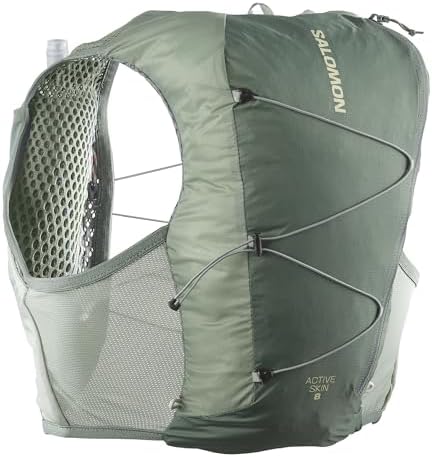
The Salomon Active Skin 8 balances lightweight comfort with practical storage for mixed-terrain running and moderate-distance trail sessions. Two included 500ml soft flasks provide easy front hydration access, while reservoir compatibility adds flexibility for longer outings. Stretch fabrics move naturally with the body to reduce friction and pressure points.
This vest works well for runners who split time between road, trail, hiking, and light adventure training. It offers enough space for layers and nutrition without feeling bulky or restrictive.
Key specs
8L storage capacity
Two 500ml soft flasks included
Reservoir compatible
Breathable stretch fabric design

The Nathan TrailMix 7L provides generous storage at an accessible price point. Breathable mesh construction supports airflow and moisture control during warmer efforts. Rear zip compartments and front bottle pockets help organise essentials efficiently for longer training sessions or hiking crossover use.
Adjustable straps allow a customised fit across different body types. Included hydration bladder adds value for runners building their first longer-distance kit.
Key specs
7L storage capacity
Mesh breathable construction
2L hydration bladder included
Adjustable fit system

The Osprey Duro 6L delivers reliable stability with enough space for longer training sessions and layered conditions. Smart pocket placement keeps hydration and nutrition easily accessible while maintaining balanced load distribution. Reflective graphics improve visibility for early morning or evening runs.
This vest suits endurance training, supported trail runs, and runners who prefer slightly more carry capacity without stepping into bulkier packs. The close-to-body fit minimises bounce even when fully loaded.
Key specs
6L storage capacity
Close-to-body bounce-free fit
Multiple easy-access pockets
Reflective visibility details

The Osprey Dyna 6L offers women-specific shaping that improves stability and comfort across longer training sessions. Pocket placement allows easy access to hydration, fuel, and layers while maintaining balance during movement. Reflective detailing enhances visibility during low-light conditions.
The secure fit reduces shifting and bounce, making this vest suitable for distance training, trail exploration, and runners who carry extra layers year-round.
Key specs
6L storage volume
Women-specific ergonomic fit
Smart pocket organisation
Reflective safety graphics

The USWE Pace vest focuses on eliminating bounce through its No Dancing Monkey four-point suspension system. This keeps the load firmly anchored during faster pacing, downhill running, and technical terrain. Two included 500ml Ultraflasks support efficient front hydration access.
Available in multiple capacities, the Pace adapts well from shorter tempo runs to longer trail efforts. It suits runners who prioritise stability above all else.
Key specs
Available in 2L, 8L and 14L capacities
No Dancing Monkey 4-point suspension
Two 500ml Ultraflasks included
Bounce-free stability system
How to Choose the Right Running Backpack
Understanding Capacity and Use Case
Choosing capacity starts with understanding how long and where you typically run. Short road runs may only require hydration and minimal storage, while mountain routes often demand layers, safety gear, and food. Fastpacking introduces overnight equipment into the equation, increasing volume requirements significantly.
Carrying more than necessary can reduce comfort and stability. It is best practice to select a pack that closely matches your most frequent outings, as it also improves usability and consistency.
Fit and Stability on the Move
Vest-style harness systems improve weight distribution and reduce bounce, while adjustable sternum and side straps allow fine-tuning for different clothing layers and loads. Stability becomes more important as volume increases.
Also a secure fit protects posture and breathing efficiency. Comfort supports longer, more relaxed movement over varied terrain.
Breathability and Material Durability
Breathable mesh panels improve airflow and reduce moisture buildup during sustained efforts. Durable ripstop fabrics withstand abrasion from trails, rock, and repeated packing. Stitch quality and pocket reinforcement affect longevity.
Differences Explained: Running Vests, Running Backpacks, Fastbackpacks, and Hiking Daypacks
| Category | Running Vest | Running Backpack | Fastpacking Backpack | Hiking Daypack |
|---|---|---|---|---|
| Typical Capacity | 3–12 liters | 10–25 liters | 18–35 liters | 15–35+ liters |
| Primary Use | Trail running, racing, hydration carry | Long runs, supported trail days, light gear carry | Multi-hour mountain routes, overnight minimalist trips | Day hiking, sightseeing, travel, casual outdoor use |
| Fit Style | Vest-style body wrap with front storage | Vest-inspired harness with backpack structure | Vest-style harness with structured back panel | Traditional shoulder straps and back panel |
| Stability While Running | Excellent bounce control | Very good stability with light to moderate loads | Excellent stability even with heavier loads | Limited stability when running |
| Comfort at Higher Speeds | Very high | High | Moderate to high | Low |
| Comfort Over Long Carry | Limited by capacity | Good for extended runs | Very good for long mountain days and overnights | Good for walking and hiking |
| Hydration Carry | Soft flasks and small reservoirs | Reservoirs and sometimes bottle pockets | Reservoirs, bottles, large water capacity | Bottle pockets or reservoir sleeve |
| Gear Carry Capacity | Minimal layers and nutrition | Layers, food, safety gear | Extra layers, food, emergency gear, sleep kit | Layers, food, camera gear, extra clothing |
| Ventilation | High airflow mesh panels | Breathable mesh with moderate airflow | Advanced ventilation systems for long wear | Varies by pack design |
| Access While Moving | Excellent front access | Good front and side access | Good but more rear storage access | Limited access while moving |
| Best Terrain | Trails, race environments | Road, trail, mixed terrain | Mountain routes, alpine terrain, long-distance routes | Established trails, parks, urban travel |
| Typical Weight Range | 6–14 oz | 12–28 oz | 1–2.5 lbs | 1.5–4 lbs |
| Who It’s Best For | Runners prioritizing speed and minimal carry | Runners needing more storage without bulk | Runners moving into fastpacking or overnight missions | Hikers and travelers prioritizing comfort over speed |
Running Backpack vs Hiking Backpack?
So, the main difference between a running backpack and a hiking backpack comes down to fit, stability, weight distribution, and movement control. Running backpacks are designed to stay tight to the body, minimise bounce, and allow unrestricted arm and torso movement at higher speeds. Hiking backpacks prioritise load carrying comfort over longer periods but assume slower, more controlled movement.
A running backpack typically uses a vest-style harness system with multiple contact points across the chest and ribs. This spreads weight evenly and keeps the pack anchored when running downhill, cornering, or moving quickly over uneven terrain. Materials are lightweight, breathable, and flexible, and pocket placement allows runners to access water, nutrition, and layers without stopping.
Hiking backpacks usually rely on a traditional shoulder strap and hip belt system designed to transfer heavier loads onto the hips. While this works well for long-distance walking and trekking, it can feel unstable or restrictive when running. Hiking packs also tend to be heavier, more rigid, and built to carry larger volumes, which increases bounce and fatigue during faster movement.
In short, if your goal involves sustained running, fastpacking, or high-output mountain movement, a running backpack provides better control, comfort, and efficiency. Hiking backpacks remain the better option for heavier loads, multi-day trekking, and slower-paced adventures where speed and bounce control are less critical.
Running Vest vs Running Backpack
While the terms are often used interchangeably, a running vest and a running backpack serve slightly different purposes depending on capacity, load size, and how much structure you need.
Also, a running vest is designed for shorter to medium-distance runs where minimal gear is carried. Capacities typically range from 2 to 12 litres and focus on hydration, nutrition, and lightweight layers. Vests sit very close to the body, offering excellent stability and minimal bounce. They also excel in road running, trail running, racing, and training, where speed and freedom of movement are the priority.
Additionally, a running backpack offers higher capacity and more structure, usually starting around 12 litres and extending into the 20+ litre range. These packs retain vest-style harness systems but introduce reinforced back panels, roll-top storage, and greater load stability for carrying extra layers, safety equipment, or overnight fastpacking gear. Running backpacks are ideal for long mountain days, unsupported routes, and runners who need more storage without switching to a traditional hiking pack.

What is Fastpacking?
Fastpacking sits between trail running and lightweight backpacking. It combines the speed and efficiency of running with the self-sufficiency of carrying overnight or extended gear. Instead of moving slowly with a heavy pack, fastpacking focuses on covering longer distances with lighter equipment.
Fastpacking packs usually fall into the running backpack category, as it offers higher capacity than a standard running vest while still maintaining close-to-body stability. Volumes typically range from 15 to 30 litres, enough to carry layers, safety equipment, food, water, and minimalist sleep systems.
Also, for runners transitioning into longer mountain days, multi-hour routes, or overnight objectives, fastpacking creates a natural bridge between trail running and backpacking.
FAQs
What is the difference between a running vest and a running backpack?
A running vest focuses on minimal carry and close body fit, while a running backpack offers higher capacity and structured storage.
Is fastpacking suitable for beginners?
Fastpacking works best once basic endurance, navigation, and packing systems are comfortable.
How much volume is enough for overnight fastpacking?
Most runners need 18 to 25 liters, depending on shelter and insulation choices.