

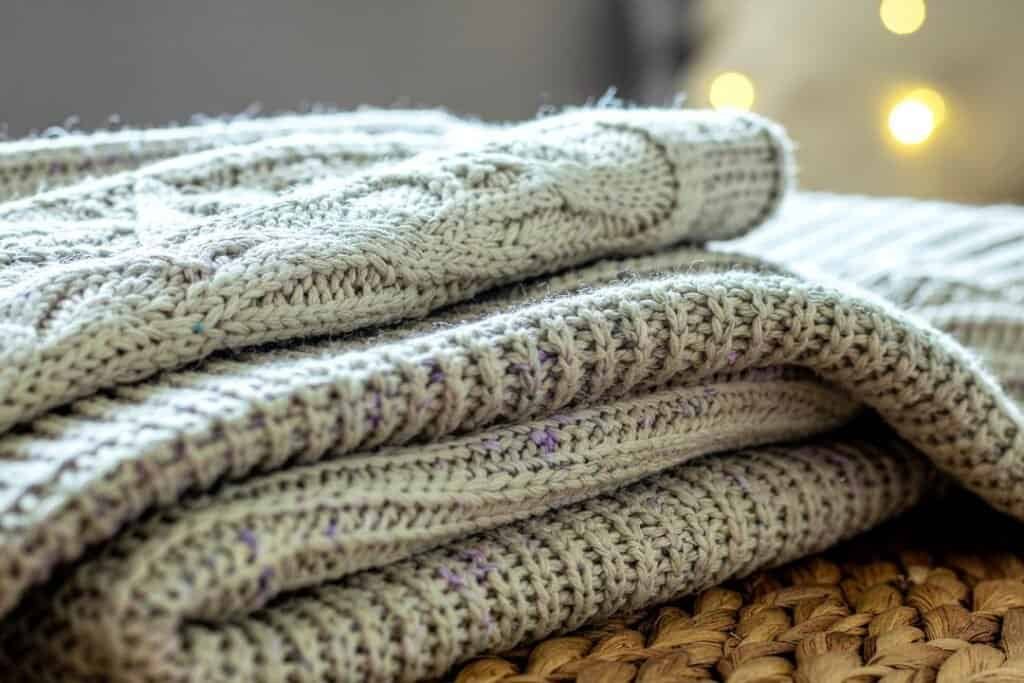
Sheep wool blankets provide consistent warmth without the heavy or trapping feel common in synthetic materials. Wool naturally regulates temperature, helping retain heat while allowing excess moisture to escape. This balance makes sheep wool well suited for home use, camping, and travel in a range of conditions. Lambswool, often referred to as virgin wool, comes from the first shearing and has a noticeably softer hand. Among natural fiber options, wool blankets continue to be a practical choice for people who want durability, temperature balance, and long-term value.
When comparing natural materials, cashmere blankets are often associated with a softer, more refined feel. Cashmere offers comfort similar to lambswool but is generally more delicate and less suited to everyday wear. Sheep wool performs better under regular use, handling changes in temperature and humidity without requiring careful handling. Its natural resilience makes it easier to live with over time.
Others consider performance-driven alternatives like merino wool blankets, which are known for finer fibers and lightweight warmth. Merino works especially well for active sleepers or travel layering, but traditional sheep wool remains a reliable option for broader use, offering structure, insulation, and affordability across seasons.
This blog is supported by the community. We may earn a small commission if you purchase through our links. As an Amazon Associate, we earn from qualifying purchases.
At a Glance
- Best Overall: Molithe Olive Green Wool Blanket
- Best Outdoor Lightweight: Chubbuck Lakeland Wool Blanket
- Best for Camping: Molithe Wool Blanket
- Best Outdoor: EKTOS Wool Blanket
- Best Virgin Wool: Arcturus Bighorn Wool Blanket
- Best New Zealand Wool: Cozy Blankets New Zealand Wool Blanket
- Best Lightweight: Bedsure Wool Blanket
Best Sheep Wool Blankets

Compact size fits easily into packs or trunks. Thick wool delivers targeted warmth in small areas. Durable seams withstand frequent rolling. Emergency preparers or day trippers include it routinely. It serves as a quick cover in vehicles.
Key Specs:
Material: 100% virgin wool
Weight: 2.6 pounds
Size: 48″ x 62″
Best Use: Survival kits, camping, events
Notable Feature: Portable and flame retardant

This blanket delivers consistent warmth during outdoor stays. Its wool construction wicks moisture to keep you dry. The material holds up against rough surfaces without fraying quickly. People who spend nights in tents benefit from its fire-retardant properties. It suits those seeking durable gear for adventures.
Key Specs:
Material: 100% wool
Weight: 2.63 pounds
Size: 60″ x 84″
Best Use: Camping, emergencies, outdoor events
Notable Feature: Fire retardant and moisture-wicking

The blanket offers thick insulation for cold conditions. Virgin wool provides breathability that prevents overheating. Edges stay secure through repeated folding and packing. Those preparing survival kits or attending events outdoors find it practical. It works well in vehicles or temporary shelters.
Key Specs:
Material: 100% virgin wool
Weight: 4.82 pounds
Size: 62″ x 86″
Best Use: Camping, military surplus, sporting events
Notable Feature: Washable with self-cleaning properties

It retains heat even when damp, aiding in wet weather hunts. The weave ensures even distribution of warmth across the body. Durability allows reuse in rugged terrain without tears. Hunters or outdoor workers gain from its compact storage option. The natural fibers suit extended field use.
Key Specs:
Material: 100% virgin wool
Weight: 4.2 pounds
Size: 90″ x 66″
Best Use: Hunting, camping, emergency kits
Notable Feature: Breathable and temperature-regulating

Pure wool ensures long-term softness that improves with airing. It regulates temperature to avoid night sweats. The construction resists pilling for lasting appearance. Homeowners looking for pieces that endure generations select this. It fits well in cabins or main bedrooms.
Key Specs:
Material: 100% virgin wool
Weight: 7 pounds
Size: 90″ x 108″
Best Use: Bedroom, cabin, outdoor
Notable Feature: Eco-friendly sourcing and breathable

New Zealand wool offers balanced warmth for indoor or out. Fringes provide a finished look that holds up. Breathability suits active days or quiet evenings. Travelers or picnickers carry it without bulk. The classic style matches multiple spaces.
Key Specs:
Material: 100% New Zealand wool
Weight: 2.2 pounds
Size: 55″ x 79″
Best Use: Home, outdoors, travel
Notable Feature: Moisture-wicking and machine washable

Herringbone weave traps air for efficient heating. It folds compactly for storage between seasons. Fringe edges add detail without catching. Those draping over furniture daily find it convenient. The certification ensures safe, sustainable contact.
Key Specs:
Material: 100% wool
Weight: 2.18 pounds
Size: 50″ x 60″
Best Use: Throws, winter comfort, gifts
Notable Feature: OEKO-TEX certified for safety
How to Choose the Right Sheep Wool Blankets
Wool Quality and Fiber Type
Start by checking the wool content. Blankets made from 100% sheep wool generally provide better insulation and breathability than blended materials. Virgin wool or lambswool tends to feel softer and perform more consistently over time due to longer, less-processed fibers.
Processing methods also affect comfort. Well-cleaned and tightly woven wool reduces itchiness and improves durability. If skin sensitivity is a concern, look for fine-grade or hypoallergenic wool labeled for bedding use.
Thickness, Warmth, and Climate Use
The thickness of a wool blanket directly impacts warmth. Thicker blankets suit cold climates, outdoor use, and winter camping, while lighter weaves work better for mild temperatures or layering.
Consider where and how the blanket will be used most often. A heavier blanket provides excellent insulation for stationary use, while lighter options adapt better to travel or seasonal transitions.
Size, Coverage, and Weight Balance
Choosing the right size ensures comfort and usability. Standard throw sizes work well for couches and travel, while larger blankets are better suited for beds or shared use.
Weight matters for portability. Heavier blankets deliver more warmth but are less convenient to move. Lightweight wool blankets are easier to pack, store, and handle daily.
Durability, Construction, and Care Needs
Examine stitching, edging, and overall weave quality. Reinforced hems and dense weaves help prevent fraying and extend lifespan, especially for outdoor or travel use.
Wool naturally resists odors and stains, reducing the need for frequent washing. Many blankets benefit from spot cleaning and regular airing rather than machine washing. Always follow care labels to preserve fiber integrity.
Best Use Cases and Lifestyle Fit
Think about the primary purpose of the blanket. Home use allows for heavier, softer options, while camping and travel require packable, rugged designs.
Temperature regulation is another key factor. Wool adapts well to changing conditions, making it suitable for layered bedding systems or multipurpose outdoor gear.
FAQs: Sheep Wool Blankets
Why is sheep wool more affordable than other wools?
Sheep wool is widely produced and easier to process at scale. Its availability and efficient harvesting make it less expensive than specialty fibers like alpaca or cashmere, while still offering excellent insulation and longevity.
Is 100% sheep wool itchy?
Not always. Higher-quality sheep wool, especially well-processed or virgin wool, feels significantly softer than coarse wool. Sensitivity varies by person, but many find modern wool blankets comfortable with regular use.
Are lambswool blankets warm?
Yes, lambswool blankets provide reliable warmth while remaining breathable. The fibers trap heat effectively without causing overheating. This makes them suitable for cool to moderately cold conditions. They work well for layering or everyday indoor use.
How many sheep are needed to make a wool blanket?
On average, one adult sheep produces enough wool in a single shearing to make one medium-weight blanket. Thicker or oversized blankets may require wool from more than one sheep.
Are sheep wool blankets good for year-round use?
Yes. Wool naturally regulates temperature, keeping you warm in winter while remaining breathable during milder seasons.
Do sheep wool blankets require special care?
Most benefit from airing out rather than frequent washing. Spot cleaning and occasional gentle washing help maintain texture and extend lifespan.
Can I machine wash a lambswool blanket?
Most lambswool blankets are not recommended for regular machine washing. Heat and agitation can cause shrinking or felting. Some may tolerate a gentle wool cycle with cold water, but air drying is essential. Always follow the specific care instructions provided by the manufacturer.