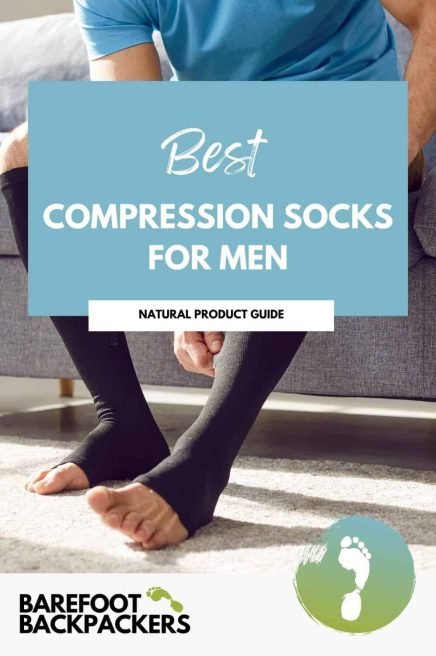


Compression socks for men are designed to support circulation, reduce lower leg fatigue, and improve comfort during long periods of standing, walking, or sitting. The effectiveness of compression socks depends largely on construction quality, material choice, and how well the socks maintain consistent pressure throughout the day. Choosing well made options from the broader category of high quality socks helps ensure durability, comfort, and reliable support.
The materials used in men’s compression socks play a major role in breathability and temperature regulation. Natural fibers tend to perform better during extended wear, especially in warm conditions or during physical activity. Wool based options are particularly effective at managing moisture and odor, which is why Merino wool compression socks are often preferred for travel, hiking, and everyday use.
Compression socks are available in different lengths, each suited to specific activities and comfort needs. Knee high designs provide full lower leg support and are commonly used for travel or prolonged sitting, while shorter styles offer flexibility and ease of movement. Ankle compression socks are a practical option for running, gym workouts, and casual daily wear when full calf coverage is not necessary.
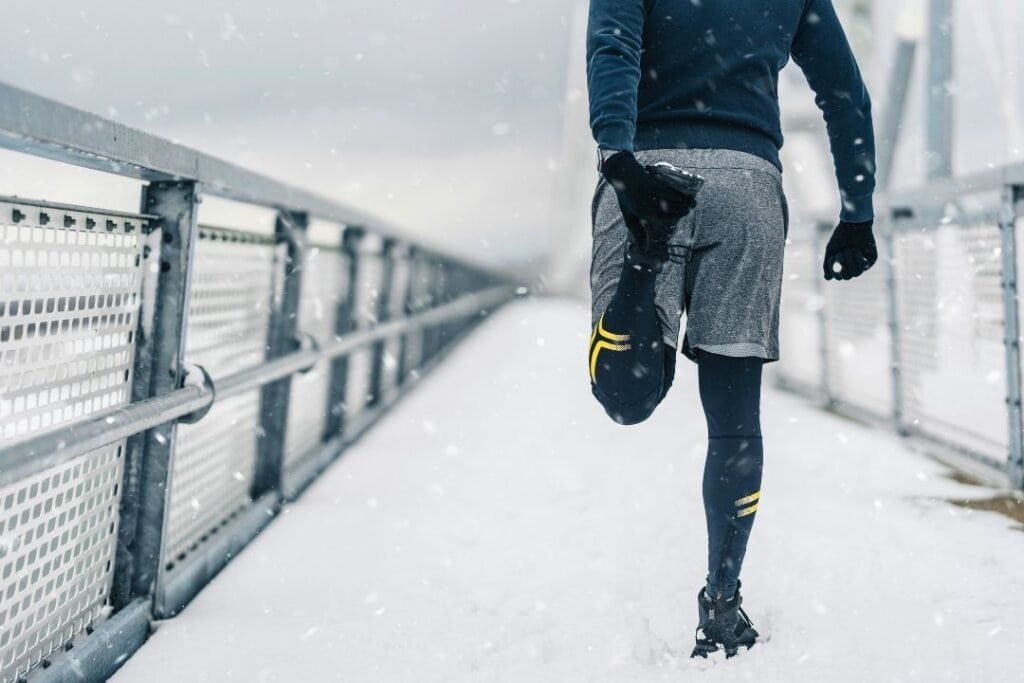
This blog is supported by the community. We may earn a small commission if you purchase through our links. As an Amazon Associate, we earn from qualifying purchases. See our Privacy Policy.
The Best Compression Socks for Men at a Glance
Copper & Medical Ankle Socks
- Best Certified Merino Compression Sock: VIM & VIGR Merino Wool 15-20 mmHg Socks
- Best Knee-High Copper Support: NEENCA Copper Compression Socks Knee-High 20-30 mmHg
- Best Best Certified Cotton Support: VIM & VIGR Merino Wool 15-20 mmHg Socks
- Best Copper Recovery Support: NEENCA Copper Compression Socks 20-30 mmHg
- Best Low Cut Copper Support: Iseasoo Copper Ankle Compression Socks 15-20 mmHg
Knee-High & Ankle Compression Socks
- Best Everyday Support: Sockwell Women’s Circulator Moderate Graduated Compression Sock
- Best Merino Wool Ankle Compression: ANTSANG 6 Pairs Merino Wool Ankle Socks
- Best Ultra Soft Compression: ja vie 80% Merino Wool 15-20mmHg Socks
- Best Cotton Firm Support: LEVSOX Thick Cotton Compression Socks 20-30mmHg
- Best Firm Support: LEVSOX Thick Merino Wool Compression Socks 20-30mmHg
- Best Bamboo Blend Support: Iambamboo Merino Wool Compression Socks 15-20 mmHg
Copper & Medical Ankle Socks

These VIM & VIGR merino wool compression socks combine 15–20 mmHg graduated compression with soft, non-itch Australian merino wool to support circulation and reduce leg fatigue. The compression profile helps alleviate achiness and heaviness while maintaining warmth, breathability, and moisture control for extended wear. A contoured leg and heel, flexible toe pocket, and durable knit ensure comfort during walking, hiking, travel, or long workdays. Designed with vascular specialists and FDA-listed, they deliver trusted medical-grade support in a natural fiber blend.
Key Specs:
Material: 45% Nylon, 40% Merino Wool, 15% Spandex (latex-free)
Compression Level: 15–20 mmHg (graduated)
Best Use: All-day wear, walking, hiking, travel, prolonged standing
Notable Feature: FDA-listed graduated compression with non-itch merino wool and wide-calf options

Knee-high design with 20-30 mmHg graduated compression and copper ions enhances circulation, reduces swelling, and provides joint warmth. Ergonomic knit balances firm support with comfort, reinforced sole absorbs impact, and fast-dry fabric stays durable. Suited for travel, athletic recovery, flights, or prolonged standing.
Key Specs:
Material: 24% Copper Ions Infused Fiber, 62% Nylon, 14% Spandex
Compression Level: 20-30 mmHg (graduated)
Best Use: Travel, pregnancy, flight, athletic recovery, prolonged standing
Notable Feature: Patented ankle tuck technique with copper warmth and shock-absorbing sole
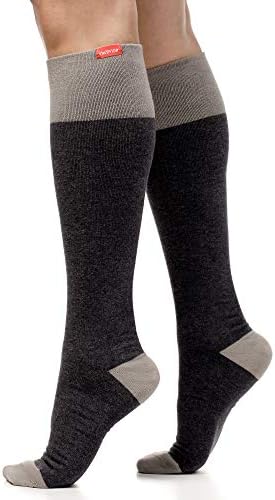
VIM & VIGR’s heathered cotton compression socks deliver firm 30–40 mmHg graduated compression, applying therapeutic pressure that starts at the ankle and gradually eases up the calf. This higher compression level is designed to significantly reduce swelling, alleviate leg heaviness, and promote stronger circulation for medical or high-support needs. Premium cotton fibers, a contoured leg and heel, and a flexible toe pocket ensure breathability and comfort despite the firm compression. Developed with vascular surgeons and FDA-listed, these socks offer trusted medical-grade support for extended wear.
Key Specs:
Material: 48% Cotton, 42% Nylon, 10% Spandex
Compression Level: 30–40 mmHg (graduated)
Best Use: Medical-grade support, severe swelling, prolonged standing or sitting, travel
Notable Feature: FDA-listed firm compression with breathable premium cotton and wide-calf options

Firm 20-30 mmHg graduated compression combined with copper-infused fibers improves circulation and adds joint warmth for recovery. Patented ankle design and reinforced sole provide targeted support and shock absorption, with breathable knit to manage sweat. Effective for running, travel, swelling reduction, or post-activity use.
Key Specs:
Material: 24% Copper Ions Infused Fiber, 62% Nylon, 14% Spandex
Compression Level: 20-30 mmHg (graduated)
Best Use: Recovery, running, travel, swelling reduction
Notable Feature: Patented 6-ring ankle tuck and copper-infused warmth
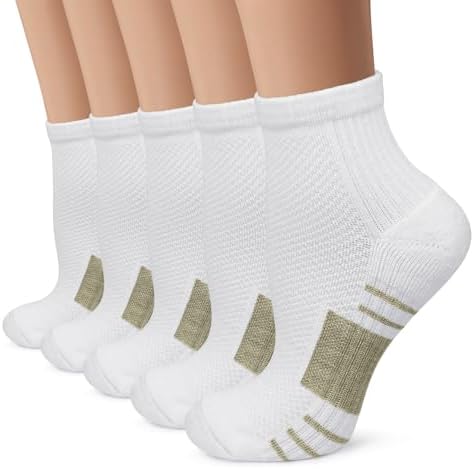
Low-cut profile fits easily under shoes, with 15-20 mmHg compression and copper fibers supporting circulation and mild joint warmth. Moisture-wicking arch, ventilation, and stay-put cuffs reduce fatigue and blisters. Practical for running, standing work, or travel without full-calf coverage.
Key Specs:
Material: 85% Cotton, 8% Copper Fiber, 7% Spandex
Compression Level: 15-20 mmHg
Best Use: Running, nurses, travel, plantar fasciitis relief
Notable Feature: Low-cut copper design with arch compression and ventilation
Knee-High & Ankle Compression Socks
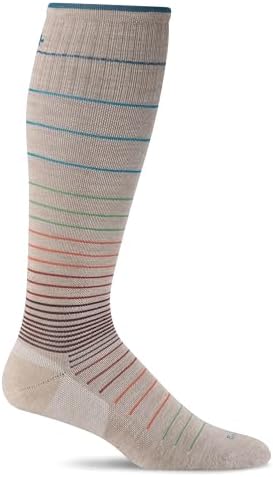
These knee-high socks provide moderate 15-20 mmHg graduated compression that reduces leg fatigue and swelling during long flights, standing work, or extended walking. The Merino wool blend offers natural breathability, moisture management, and odor resistance, making them suitable for all-day wear. Arch support, seamless toe closure, and light cushioning add to the overall comfort and practicality for daily use or travel.
Key Specs:
Material: 31% Merino Wool, 31% Rayon, 29% Nylon, 9% Spandex
Compression Level: 15-20 mmHg (moderate graduated)
Best Use: All-day wear, travel, prolonged sitting or standing
Notable Feature: 4 zones of graduated compression with arch support
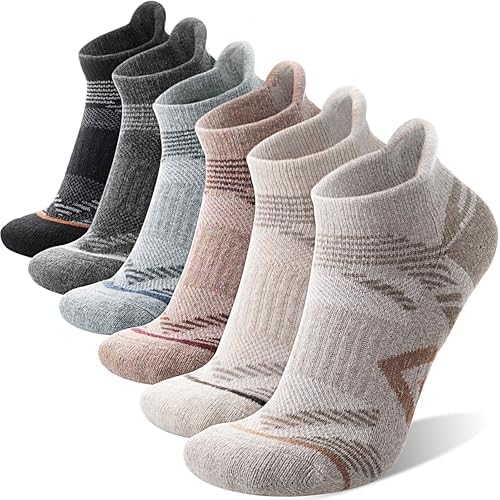
Gentle 8-10 mmHg compression through targeted stripes supports circulation and reduces fatigue, with 70% Merino wool for breathability and odor control. Cushioned soles absorb shock, seamless toes prevent irritation, and ventilation channels manage moisture. The 6-pair pack delivers reliable performance for hiking or everyday activity.
Key Specs:
Material: 70% Merino Wool, 23% Polyester, 5% Spandex, 2% Nylon
Compression Level: 8-10 mmHg (gentle targeted compression)
Best Use: Hiking, running, walking, outdoor activities
Notable Feature: Ventilation channels and gentle compression stripes for breathability

High Merino wool content (80%) delivers softness and excellent breathability while the 15-20 mmHg graduated compression supports circulation and eases tired legs or minor swelling. They perform well for travel, prolonged standing, or light athletic activity, with natural odor control and temperature regulation.
Key Specs:
Material: 80% Merino Wool, 9% Polyester, 8% Spandex, 3% Nylon
Compression Level: 15-20 mmHg (graduated)
Best Use: Travel, athletics, prolonged sitting or standing
Notable Feature: Ultra-soft high-Merino construction for breathable comfort

Firm 20-30 mmHg graduated compression promotes circulation and reduces fatigue, with a high cotton content for softness and a cushioned feel underfoot. Wide cuffs prevent pinching, and the thickened sole adds durability and comfort for travel, long shifts, or standing-heavy days.
Key Specs:
Material: 70% Cotton, 22% Nylon, 8% Elastane
Compression Level: 20-30 mmHg (graduated, firm)
Best Use: Travel, pregnancy, nursing, prolonged standing
Notable Feature: Thick cotton sole for cushioned comfort and durability

Firm 20-30 mmHg graduated compression offers stronger circulation support for flights, long shifts, or recovery needs. High Merino wool percentage maintains breathability and temperature control, while the thick terry sole cushions impact and reinforced areas increase durability for consistent travel and daily use.
Key Specs:
Material: 62% Merino Wool, 23% Nylon, 15% Spandex
Compression Level: 20-30 mmHg (graduated, firm)
Best Use: Flying, travel, prolonged standing
Notable Feature: Thick terry sole for shock absorption and reinforced durability

Merino wool and bamboo viscose combination provides softness, moisture-wicking, and odor control, paired with 15-20 mmHg graduated compression for improved leg circulation. Reinforced footpads absorb shock, and Lycra maintains shape and fit over time, making them effective for flights, running, or extended standing.
Key Specs:
Material: 30% Merino Wool, 50% Viscose from Bamboo, 15% Repreve Sorbtek Polyester, 5% Lycra
Compression Level: 15-20 mmHg (4-zone graduated)
Best Use: Travel, flying, running, prolonged sitting or standing
Notable Feature: Bamboo-Merino blend with Sorbtek for enhanced moisture management
How to Choose the Right Compression Socks for Men
Choosing the right compression socks for men involves more than selecting the correct size. Compression level, materials, and intended use all play a role in how effective and comfortable the socks feel during travel, outdoor activity, or long days on your feet. The right pair supports circulation while still allowing natural movement and breathability.
Understanding Compression Levels
Compression socks are measured in millimeters of mercury mmHg, which indicates how much pressure they apply to the lower leg. Mild compression in the 15 to 20 mmHg range is well suited for everyday wear, light activity, and travel. This level helps reduce fatigue and mild swelling without feeling restrictive, making it a practical option for regular use.
Higher compression levels in the 20 to 30 mmHg range are typically used for long flights, extended standing, or post activity recovery. These provide firmer support and are often chosen by people who spend many hours seated or on their feet. Regardless of compression strength, graduated compression is important. Pressure should be strongest at the ankle and gradually decrease up the calf to encourage healthy blood flow.
Material and Comfort
The materials used in compression socks significantly affect comfort, temperature regulation, and moisture control. Natural fibers such as Merino wool, cotton, and bamboo offer breathability and softness that improve long wear comfort. Merino wool is especially well suited for compression socks because it helps regulate temperature, manages moisture, and resists odor. This makes Merino wool compression socks a practical option for both travel and active use.
Understanding how different materials behave can help avoid irritation and overheating. Guides that explore natural fibers in more detail can be useful when comparing options. Socks that rely heavily on synthetic materials often trap moisture and heat, which can reduce comfort during extended wear.
Comfort features also matter. Seamless toes help reduce pressure points, cushioned soles add impact protection, and light arch support can improve stability during walking or standing. These details are common in well made, high quality socks designed for long term use.
Fit and Practical Use
Compression socks should match both the activity and the length needed for proper support. Knee high socks are commonly used for travel and situations where extended circulation support is needed. Shorter styles such as ankle compression socks work well for running, gym sessions, or casual daily wear when full calf coverage is not necessary.
Proper sizing ensures consistent compression throughout the foot and lower leg. Socks that are too tight can feel restrictive, while loose socks lose their effectiveness. Measuring both foot size and calf circumference helps achieve a more accurate fit. Reinforced heels and toes improve durability, especially for outdoor use or frequent travel.
Ease of use is another practical consideration. Compression socks that are easier to put on while still staying in place throughout the day tend to be more comfortable for extended wear. For longer trips or regular use, owning multiple pairs allows rotation and helps maintain hygiene and comfort.
Compression Socks Size Chart
| Size | Women’s Shoe Size (US) | Men’s Shoe Size (US) | Fit Notes |
|---|---|---|---|
| Small / Medium | 4 – 7.5 | 4 – 6.5 | Best for narrower feet and lower calf volume |
| Medium / Large | 8 – 11 | 7 – 9.5 | Most common fit for average feet and calves |
| Large / Extra Large | 11.5 – 13 | 10 – 12 | Designed for larger feet and higher calf volume |
| Wide Calf / Plus Size | Varies by brand | Varies by brand | Extra room in the calf while maintaining ankle compression |
FAQs
Are compression socks necessary for everyday wear?
They are not required, but moderate compression can improve circulation and reduce leg fatigue, especially for long periods of standing, walking, or travel.
What is the difference between knee-high and ankle compression socks?
Knee-high socks provide longer coverage and stronger circulation support, ideal for travel or medical needs. Ankle socks are lighter, better for exercise, and easier to wear casually.
Can I wear compression socks while hiking?
Yes, hiking-specific compression socks with cushioning and natural fibers support circulation, reduce fatigue, and manage moisture during long outdoor treks.