
If you are looking for a great snow ski backpack, that doubles as a small daypack, built to stay on your back on the chairlift and carry what you need on the mountain. This means essentials such as water, a spare layer, snacks and goggles; then you have found the right guide. Most packs in this guide hold 10 to 20 liters (about 610 to 1,220 cubic inches), enough for lunch and a puffer but slim enough to sit flat against the chair.
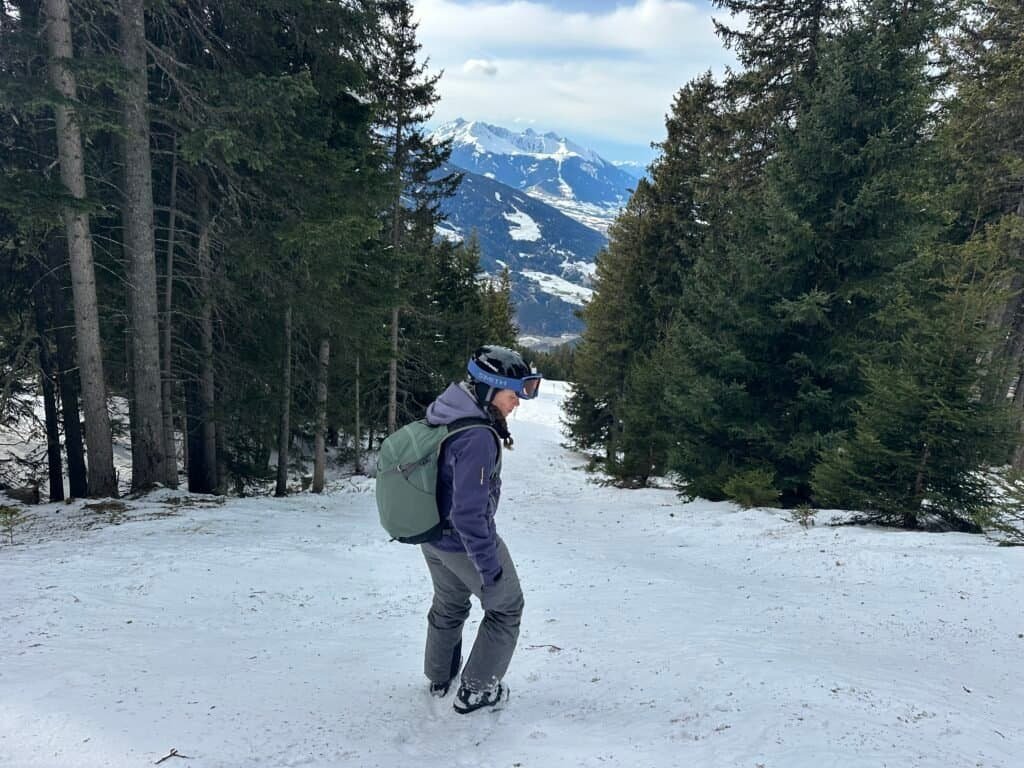
For me, a good pack comes down to how I feel on the chairlift. I buy thin packs on purpose, because I hate feeling insecure with a backpack on the lift. Where I ski in the Austrian Alps there’s usually no base lodge to leave lunch in, so my Osprey Sportlite 20L backpack carries lunch for two, layers and water. On one cold ski day I even made hot chocolate from my own flask in a little forest area off the slope. So, I was thankful to have a good size pack that day.
Below are 9 picks, led by the Sportlite for its thin, secure fit, from a 6 L waist pack to a 50 L boot bag backpack, plus what to look for and the questions skiers ask most. For the rest of your ski day kit, see our ski essentials guide.
At a Glance
- 1Osprey Sportlite 20Check price
- 2Osprey Glade 12Check price
- 3CamelBak Powderhound 12Check price
- 4Salomon Trailblazer 10Check price
- 5Osprey Talon 6Check price
- 6Dakine Heli Pro 20LCheck price
- 7Dakine Women’s Heli Pro 20LCheck price
- 8Osprey Kamber 20Check price
- 9Unigear 50L Ski Boot Bag BackpackCheck price
| Pack | Size | Ski carry | Best for |
|---|---|---|---|
| Osprey Sportlite 20 | 20 L | None (pole loops fit hiking poles) | Full days, all year round |
| Osprey Glade 12 | 12 L + 2.5 L reservoir | Diagonal | Water on the move |
| CamelBak Powderhound 12 | 10 L + 2 L reservoir | A-frame or diagonal | Snacks on the chair |
| Salomon Trailblazer 10 | 10 L | None | Lodge and half days |
| Osprey Talon 6 | 6 L | None | Skipping the backpack |
| Dakine Heli Pro 20L | 20 L | A-frame or diagonal | Hiking to a run |
| Dakine Women’s Heli Pro 20L | 20 L | A-frame or diagonal | A women’s fit |
| Osprey Kamber 20 | 20 L | Diagonal | Touring days |
| Unigear 50L | 50 L | Side straps | Boots and helmet to the hill |
The 9 Best Snow Ski Backpacks

Osprey Sportlite 20
The Sportlite 20 is our top pick because it gets the one balance right that matters most on a resort day: thin enough to sit flat and secure on a chairlift, big enough for lunch for two, extra layers, a hat, sunglasses and water. The hip belt and sternum strap keep it snug while you ski, and the panel-loading main compartment opens wide, so you’re not digging for a sandwich at the top of the lift.
It’s a hiking and sport pack, not a ski pack, so there’s no ski carry and no goggle pocket. If you hike up to runs or want water on a hose, look at the Heli Pro or the Glade below. Off the hill it’s the pack I take everywhere, and my laptop fits in the hydration sleeve for a cafe day.
- Material
- Nylon
- Capacity
- 20 L (1,220 cu in)
- Size
- 17.7 x 11.4 x 8.7 in (45 x 29 x 22 cm)
- Carry
- Hip belt, sternum strap with whistle, compression straps, trekking pole loops
- Water
- Hydration sleeve, reservoir not included
- Best for
- Full resort days, and everything after
- Tested by us
- I’ve skied with my Sportlite for two seasons, from Kühtai last February to Stubai Glacier this October, and it was my personal item and day pack for four months of backpacking through Central and South America, from May to August 2026. It feels secure on every lift, and it’s thin without ever feeling too small. It’s my go-to pack, all year round.

Osprey Glade 12
The Glade is the pick for drinking on the move, because it comes with a 2.5 L reservoir and an insulated sleeve for the hose, so you can sip on the lift without taking the pack off. It’s a proper ski pack too, with a diagonal ski carry, a front panel that holds a snowboard or snowshoes, and inside pockets for your phone, gloves and snacks.
At 12 L it holds the reservoir, a light layer and lunch for one, not two. On freezing days I leave the bladder at home and carry a stainless steel bottle, so this is the pack for milder days or for skiers who love a hose. It’s a newer design, so there are fewer owners to go by than for the others here.
- Material
- Nylon
- Capacity
- 12 L, with a 2.5 L reservoir
- Size
- 18.5 x 9.8 x 9.1 in (47 x 25 x 23 cm)
- Weight
- 1.9 lb (0.84 kg)
- Carry
- Diagonal ski carry, front snowboard or snowshoe carry
- Best for
- Water on the move

CamelBak Powderhound 12
The Powderhound earns the lift label for one clever detail: its harness lets the pack swing around to your front on the chairlift, so you can grab a snack or your phone without taking it off. It also has an insulated tube, an A-frame or diagonal ski carry and a removable waist belt.
The 12 in the name includes the reservoir, which leaves about 10 L for your things: a layer, gloves and a snack. If you carry lunch for two, the Sportlite or a 20 L pack is the better fit.
- Material
- Nylon, polyester
- Capacity
- 10 L of gear space plus a 2 L (70 fl oz) reservoir
- Size
- 19.7 x 10.6 in (50 x 27 cm)
- Carry
- A-frame or diagonal ski carry, snowboard carry, removable waist belt, sternum strap
- Best for
- Snacks on the chair

Salomon Trailblazer 10
The Trailblazer 10 is the pick for lodge days and half days, because it carries exactly what you need when there’s a hut for lunch: water, a sandwich and one thin layer, tight to your back and barely there. Mine is the older Salomon Trail 10, which has now been updated to the Trailblazer 10. We love that it folds small enough to ride inside my boot bag on the way to the hill.
Ten liters is the limit: no room for a puffer, no ski carry and no goggle pocket. The sternum strap stretches as you breathe, and mine also has a hip strap, which is what stops it bouncing when you ski.
- Material
- Body 100% polyamide; pockets 88% polyamide, 12% elastane; lining, back insert and shoulder straps 100% polyester; foam 100% polyethylene
- Capacity
- 10 L
- Weight
- 0.7 lb (323 g)
- Carry
- Elastic sternum strap, top pocket with key clip, trekking pole holder
- Water
- Reservoir sleeve, reservoir not included
- Best for
- Lodge and half days
- Tested by us
- I’ve used my Trail 10 for one season, most recently at Stubai Glacier this October, with water, my sandwiches and one thin layer inside. It’s thin and breathable and stays put with the straps done up; the catch is that 10 L fills up fast. It’s my lodge-day pack, and it folds into my boot bag on the bus.

Osprey Talon 6
The Talon 6 is for skiers who don’t like the feeling of a backpack on a chairlift but still want a few things with them. My husband skis with this one: it holds a small water bottle, a sandwich and one light layer, and you barely notice it’s there.
Six liters is a half-day amount, so on a full day our lunch goes in a backpack. Two zippered hip-belt pockets keep a phone and a snack within reach, and the compression straps hold a light jacket on the outside. This listing is the men’s version.
- Material
- Bluesign approved, 100% recycled 100D high-tenacity nylon with dobby check ripstop, DWR treatment made without PFAS
- Capacity
- 6 L
- Weight
- 15.2 oz (0.43 kg)
- Carry
- BioStretch hip belt, two zippered hip-belt pockets, two water bottle sleeves, compression straps
- Best for
- Half days, and skiers who skip the backpack
- Tested by us
- My husband has skied with the Talon 6 for one season, most recently at Stubai Glacier this October. It’s great for half days or if you don’t like backpacks, but it only fits a small bottle, a sandwich and a light layer. If you don’t like the feeling of a backpack, this is a great second.
Dakine Heli Pro 20L
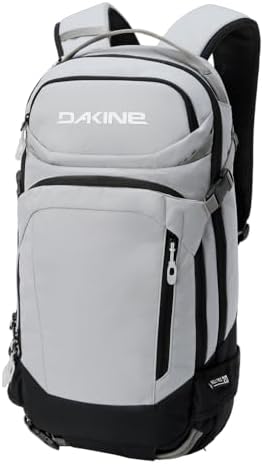
The Heli Pro earns the ski carry label because it takes skis A-frame or diagonally and a snowboard vertically or horizontally, which matters the day you boot-pack up to a run. It also has a large fleece-lined goggle pocket, snow tool sleeves, an external shovel blade carry and a hydration sleeve that doubles as a laptop sleeve off the mountain.
It’s built around backcountry tools, so on a groomer day the shovel sleeve is empty space, and the 20 L body fills quickly once a shovel goes in. For lift-only days, the Sportlite does the same job with less to it.
- Material
- 100% recycled polyester
- Capacity
- 20 L (1,200 cu in)
- Size
- 21 x 12 x 8 in (53 x 30 x 20 cm)
- Weight
- 1.9 lb (0.86 kg)
- Carry
- A-frame or diagonal ski carry, vertical or horizontal snowboard carry, 38 mm web belt, sternum strap with whistle
- Best for
- Hiking to a run
Dakine Women's Heli Pro 20L
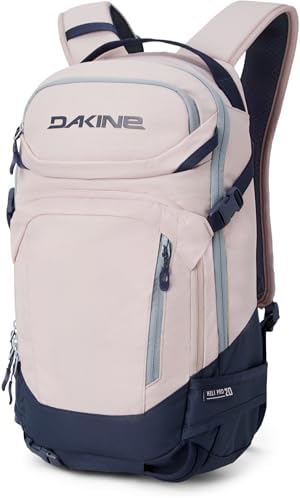
The women’s Heli Pro is our pick for women because it keeps everything that makes the Heli Pro work, the A-frame or diagonal ski carry, the snow tool sleeves and the quick-dry padded back, on a women’s-specific fit. If you’re petite like me (I’m 5’2″), try it on with your ski jacket before a long day; fit is the whole point of this one.
It carries the same backcountry features you won’t use on a resort day, and the care label says hand wash only, so it’s not one to throw in the machine after a slushy spring week.
- Material
- 100% recycled polyester
- Capacity
- 20 L
- Fit
- Women’s specific
- Carry
- A-frame or diagonal ski carry, vertical or horizontal snowboard carry, quick-dry mesh padded back panel
- Care
- Hand wash only
- Best for
- A women’s fit

Osprey Kamber 20
The Kamber 20 is the backcountry pick because it’s built for the climb: dedicated sleeves for a shovel handle and probe, an insulated hose sleeve, a diagonal ski carry and a stow-away helmet carry on the front or top for long ascents. A scratch-free goggle pocket and two zippered hip-belt pockets keep the small things close.
At 2.6 lb (1.2 kg) it’s the heaviest pack here apart from the boot bag, and on a resort day the avalanche sleeves stay empty. A shovel sleeve is only half of it: carry a beacon, shovel and probe, and know how to use them before you leave the piste. This is the men’s pack; Osprey makes a women’s version, the Kresta.
- Material
- Bluesign approved recycled high-tenacity nylon
- Capacity
- 20 L
- Weight
- 2.6 lb (1.2 kg)
- Carry
- Diagonal ski carry, vertical and horizontal snowboard carry, stow-away helmet carry, hip belt with two zippered pockets, ice tool loop
- Water
- Reservoir pocket with insulated hose sleeve
- Best for
- Touring days

Unigear 50L Ski Boot Bag Backpack
The Unigear 50L isn’t a pack you ski with: it’s the boot bag backpack I carry to the hill, and it earns its place here because it gets boots, helmet and goggles to the lift with both hands free. The boots go in their own compartment, the base is lined with tarpaulin so slush stays outside, and the back panel flips down into a mat to stand on while you change.
You can strap skis to the side, which is great for the walk from the car to the chalet, but on a crowded bus you can’t put the bag down without taking the skis off, and worn standing it takes a lot of room. For more options, from carry-on sizes to a heated bag, see our full guide to ski boot bags.
- Material
- Tarpaulin and 1050D nylon (as the listing states; no percentages given)
- Capacity
- 50 L (a 70 L version exists)
- Size
- 19.7 x 11.8 x 12.6 in (50 x 30 x 32 cm)
- Boot fit
- Up to US men’s 12.5
- Carry
- Padded straps, EVA padded mesh back panel, external ski straps
- Best for
- Boots and helmet to the hill
- Tested by us
- I’ve used my Unigear for one season now, taking my boots and helmet on the bus to the hill and leaving it by the lift. It’s compact and water-resistant; the downside is that skis strapped to it make it awkward on a bus. It’s my go-to for getting boots and helmet anywhere, and my Salomon Trail 10 folds inside it.
From our trips
These four came skiing with us this past season in Tyrol, from Kühtai in February to Stubai Glacier in October, and the Sportlite comes everywhere else too.
The Osprey Sportlite 20
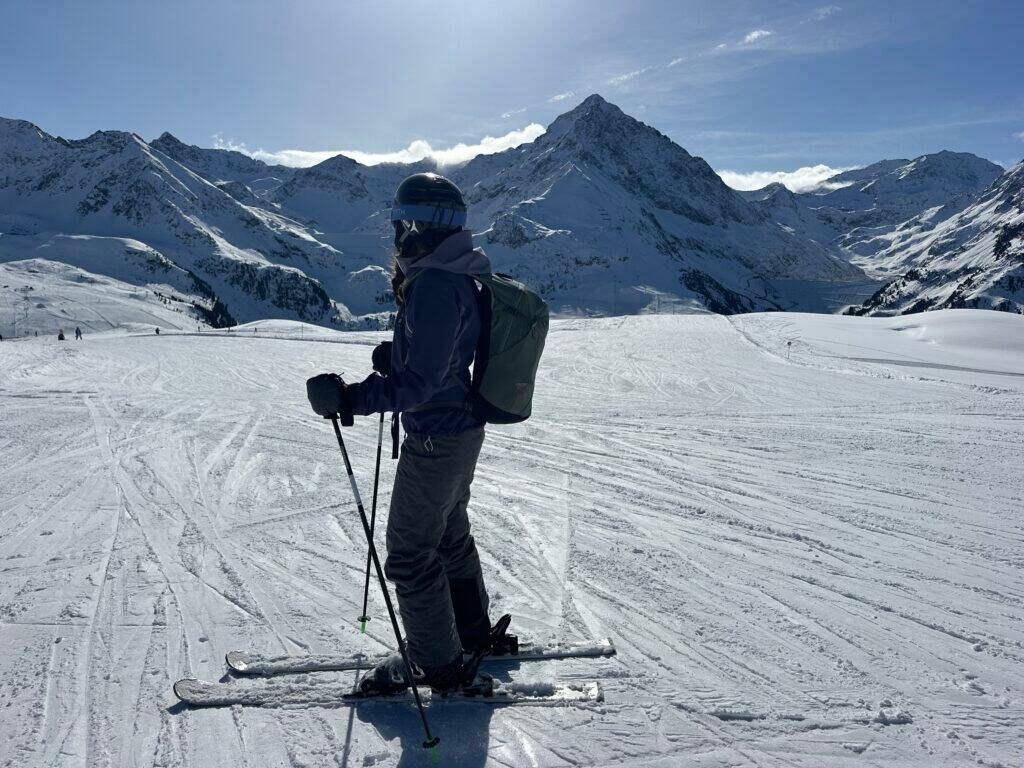
In the Alps where I ski, there usually isn’t a base lodge to leave your lunch and boot bag in, the way there is in Canada and the States. There are often lockers by the bottom lift where people change into their boots, and then everyone skis with their things, so the pack carries the whole day. The Sportlite does: lunch for two, layers, snacks and water, and I like having lots of snacks so I’m not buying at the huts. It’s also the pack I took on four months of backpacking through Central and South America, from May to August 2026. My husband carried his Talon 22 and I had the Sportlite, but we often switched them up and took one of the two as the day pack. On planes and buses the Sportlite was my personal item.
The Salomon Trail 10
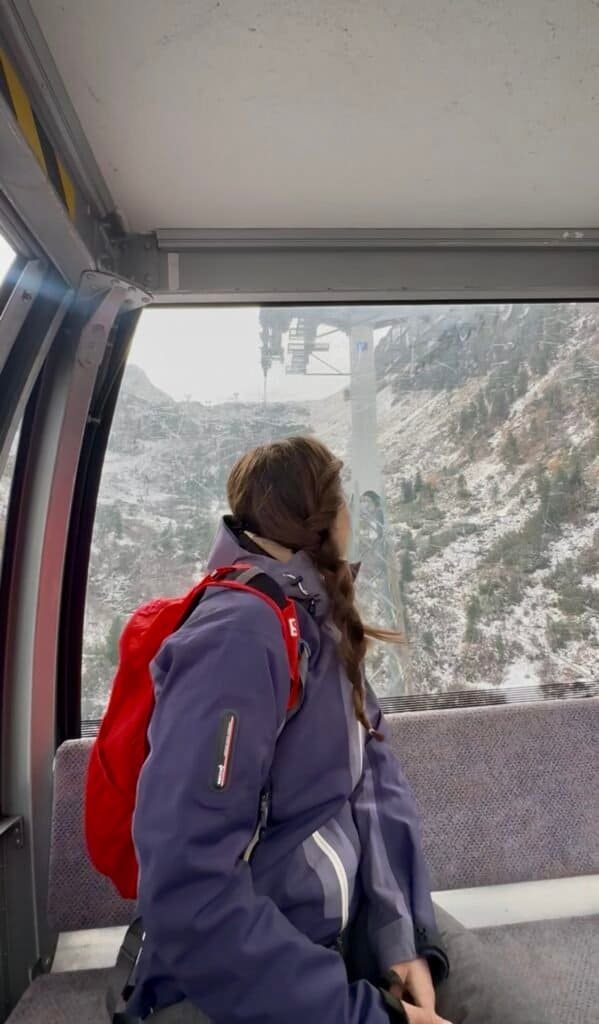
The Trail 10 is my lodge-day pack. If there’s a hut where we’re stopping, I only need water, maybe a sandwich and one thin layer, and this carries exactly that. It folds into my boot bag for the bus and comes out at the lift. Next to the Sportlite it’s lighter and smaller, but there’s no room for a second layer.
The Osprey Talon 6
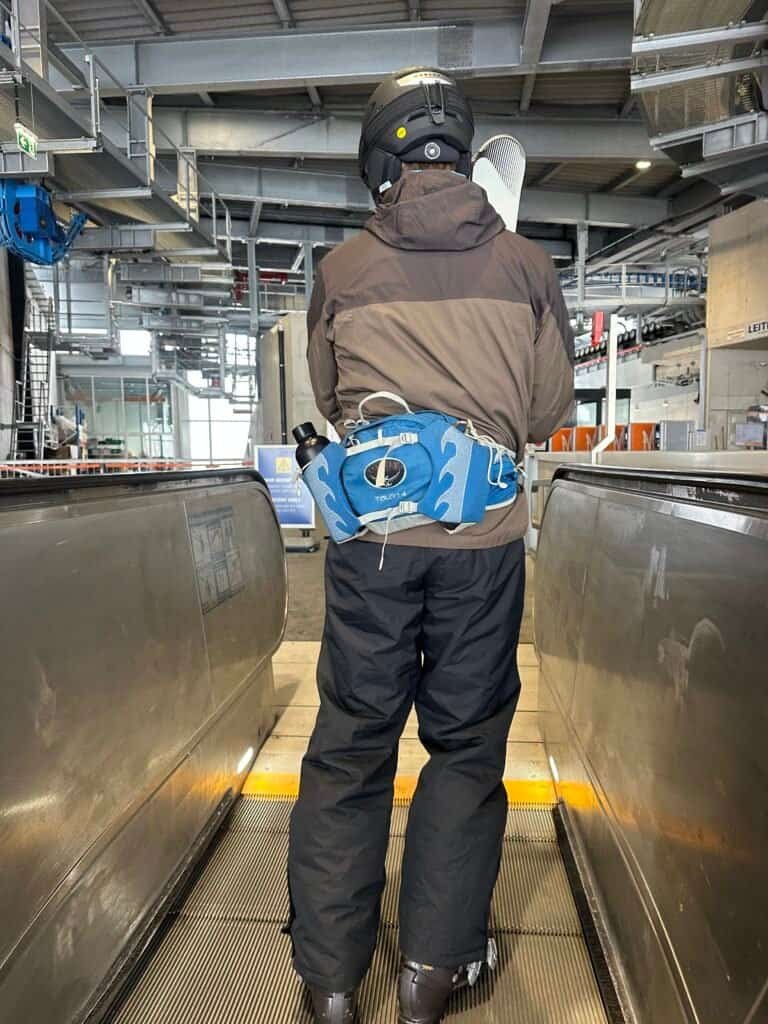
My husband doesn’t like the feeling of a backpack on the chairlift, so he wears the Talon 6. It holds a small water bottle, a sandwich and a light layer, and you barely notice it’s there. On full days we split it: he wears the waist pack, and lunch for two fits in my Sportlite.
The Unigear 50L boot bag
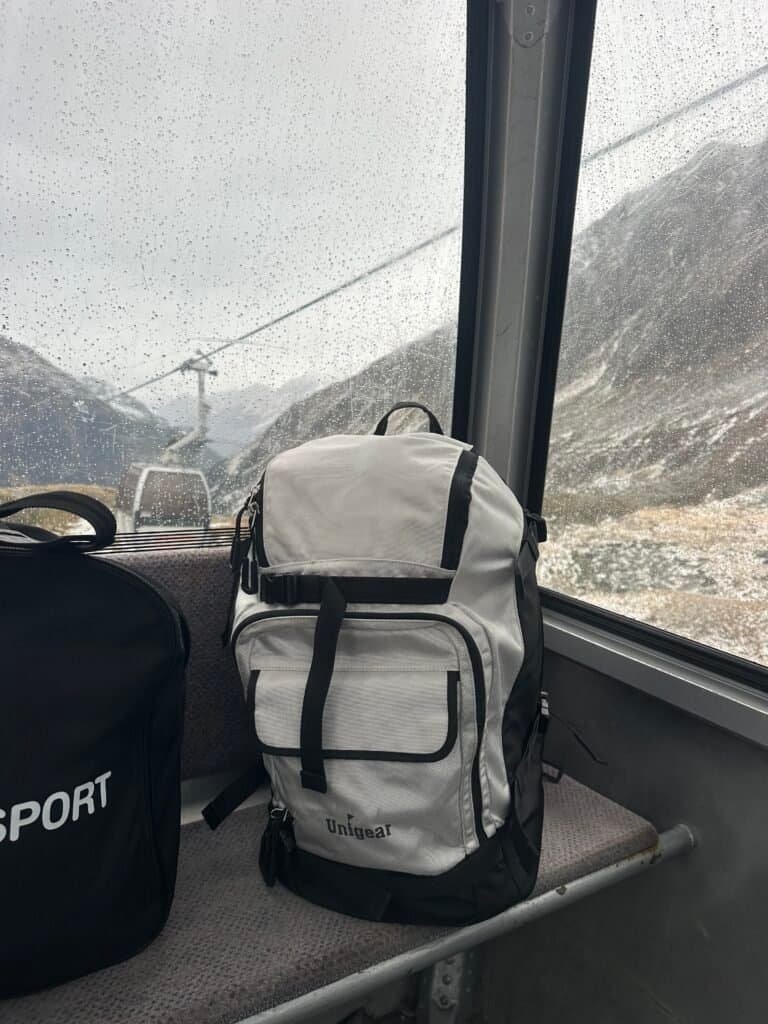
The Unigear is how my boots and helmet get to the hill. It’s compact and water-resistant, so a wet bus floor or a spot by the lift is no problem. Skis strapped to it work for the walk from the car to the chalet, but if I’m taking the bus, the skis come off before I get on.
Want the sizes side by side? Jump back to the comparison table.
How we picked
We started with the packs we actually ski with and asked what each of the others does that ours don’t: a reservoir for drinking on the lift, a harness that swings to the front, a ski carry for hiking to a run, a women’s fit, avalanche tool sleeves. Every pick had to sit securely on a chairlift or have a clear reason not to, and come from a brand with a long record in packs.
Packs are one of our exceptions to the natural-fiber rule, as you aren’t technically wearing them next to the skin, so these are nylon and polyester, chosen for how they’re built. Here’s more on how we choose gear.
What to look for in a snow ski backpack
Size for your kind of day. On a lodge day or a half day, 6 to 10 L carries water, a snack and a thin layer. On a full day with no lodge, about 20 L takes lunch, a puffer and water. Touring starts at 20 L, with room for a shovel and probe.
A thin, snug fit on the lift. Look for a slim profile plus a hip belt and sternum strap, and do them up before you load. I keep my pack on for T-bars and button lifts too, straps done up, and barely notice it.
Water that won’t freeze. On freezing days I skip the bladder and carry a stainless steel bottle, filled at the hut. If you love a hose, pick a pack with an insulated sleeve, like the Glade, the Powderhound or the Kamber, and blow the water back into the reservoir after each sip.
A soft goggle pocket. A soft-lined pocket, like the Heli Pro’s fleece-lined one or the Kamber’s scratch-free one, keeps lenses from scratching. And never wipe wet goggles with your gloves: snow and rain carry grit that wears the coating. More on lenses in our snow ski goggles guide.
A ski carry, if you hike. Lift-only skiers don’t need one. For hiking to a run, look for an A-frame or diagonal carry; for the walk from the car, a pair of ski straps does the job.
Getting your gear there. Boots and skis travel separately from the pack you ski with. A boot bag backpack plus a single ski bag is the setup I finessed over a few runs on Austrian buses, and if you’re flying, our ski bag guide covers padded bags and rollers.
FAQs
You don’t need one, but a small pack makes a full day easier when there’s nowhere to leave your things. In the Alps I ski with one every day for lunch, layers and water; at a resort with a base lodge, a waist pack or your jacket pockets may be enough. If you don’t like a pack on the lift, try a waist pack like the Talon 6.
For most skiers it’s fine if the pack is small and fitted: a thin pack with the hip belt and sternum strap done up sits flat against the chair. Loose straps and big packs are what catch, so tighten everything before you load, and take a large pack off if the lift staff ask.
For resort days, 10 to 20 L covers it: 10 L carries water, a snack and a thin layer, and 20 L adds lunch and a puffer. Backcountry tours need 20 L or more for a shovel, probe and skins. A waist pack of about 6 L works for half days.
Water, snacks or lunch, a spare layer, a hat, sunglasses and a goggle cloth. I bring plenty of my own snacks so I’m not buying at the huts, and on cold days a flask of hot water for hot chocolate.
Carry a stainless steel bottle inside your pack and refill it at the hut; that’s what works best for me. If you use a reservoir, pick a pack with an insulated hose sleeve and blow the water back after each drink. On very cold days, I would leave the bladder at home. The Alps are much less cold than Canadian skiing, so I haven’t had this problem here.
Yes, a thin hiking daypack with a hip belt and sternum strap works well for resort skiing; my Osprey Sportlite and Salomon Trail 10 are both hiking and trail running packs. What you give up is a ski carry, a goggle pocket and avalanche tool sleeves, which only matter if you hike to runs or tour.